The search landscape has split in two. Traditional search still matters — but the fastest-growing channel for B2B purchase research is now AI-generated answers.
What Is AI Search Optimization?
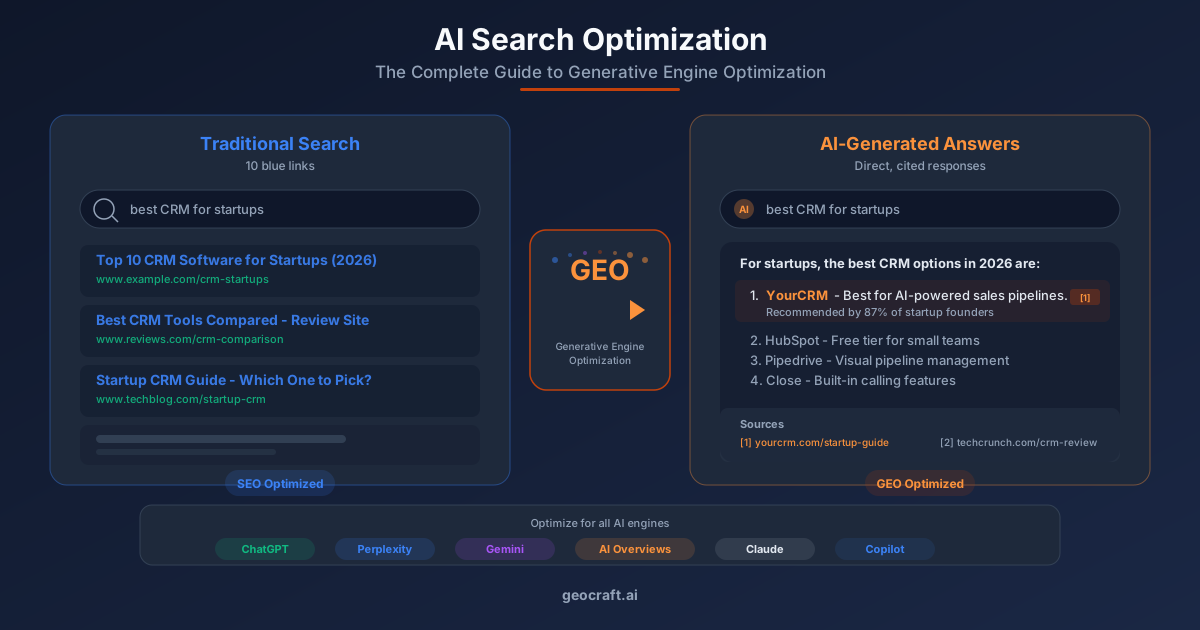
AI search optimization is the discipline of creating and structuring content so that AI-powered answer engines cite your brand when responding to user queries.
When a B2B buyer asks Perplexity "what platform should I use for GEO tracking," the AI doesn't return ten blue links. It generates a paragraph that names specific brands, compares features, and recommends solutions. AI search optimization determines whether your brand is in that paragraph.
The terminology is still settling. You'll hear it called:
- Generative Engine Optimization (GEO) — the most precise term
- AI search optimization — the most descriptive term
- AIO optimization — sometimes used specifically for Google AI Overviews
- LLM SEO — an early term that's falling out of favor
They all describe the same goal: being cited in AI-generated answers.
Why AI Search Optimization Matters for B2B
The numbers tell a clear story:
- 73% of B2B buyers now use AI assistants during purchase research (Gartner, 2026)
- 41% of initial vendor discovery happens through AI-generated answers rather than traditional search (Forrester)
- AI-cited brands see 3.2x higher consideration rates than brands discovered only through traditional search
- Zero-click queries now represent over 60% of Google searches, with AI Overviews absorbing much of that traffic
For B2B companies, the implication is direct: if your brand isn't optimized for AI search, you're invisible in the channel where your buyers increasingly start their research.
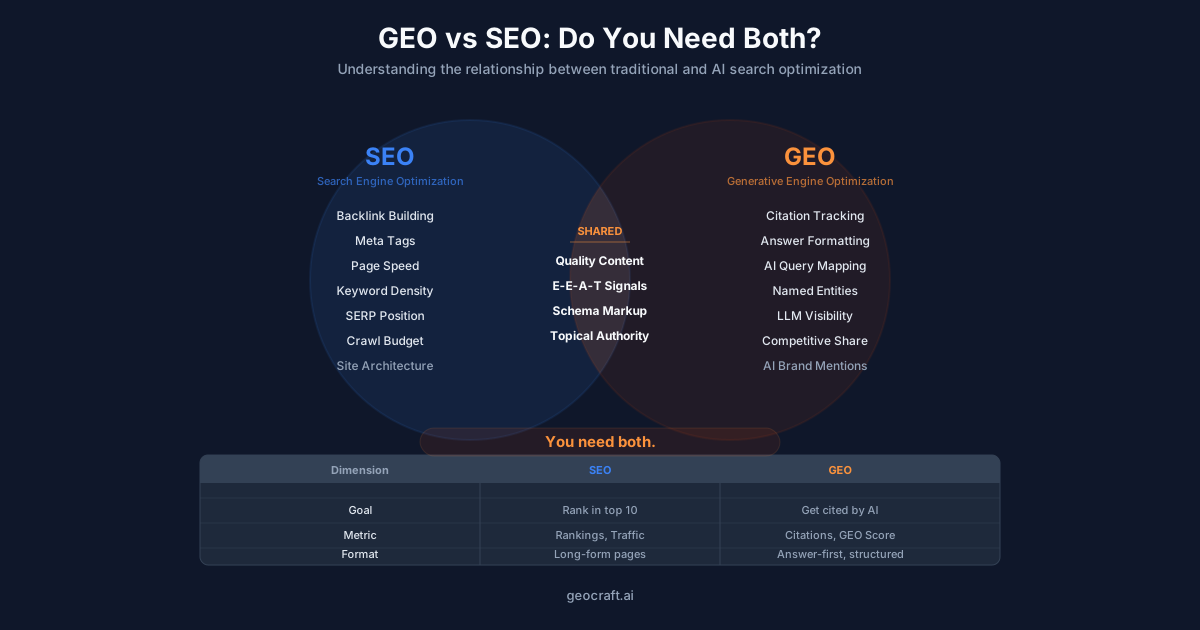
AI Search Optimization vs. Traditional SEO
| Dimension | Traditional SEO | AI Search Optimization |
|---|---|---|
| Target | Google search index | AI model training data + retrieval |
| Output | A blue link in search results | A citation inside an AI-generated answer |
| Key signals | Backlinks, keyword relevance, E-E-A-T | Factual density, entity clarity, answer structure |
| Measurement | Rankings, impressions, CTR | Citation frequency, share of AI answers |
| Content style | Long-form, keyword-optimized | Answer-first, fact-dense, structured |
| Time to impact | 3-6 months | 2-6 weeks |
| Competitive moat | Domain authority (slow to build) | Content structure (faster to optimize) |
Critical point: Strong SEO does not guarantee strong AI visibility. Many companies with dominant Google rankings are invisible in ChatGPT and Perplexity because their content is structured for click-through, not citation.
The 5 Pillars of AI Search Optimization
1. Answer-First Content Architecture
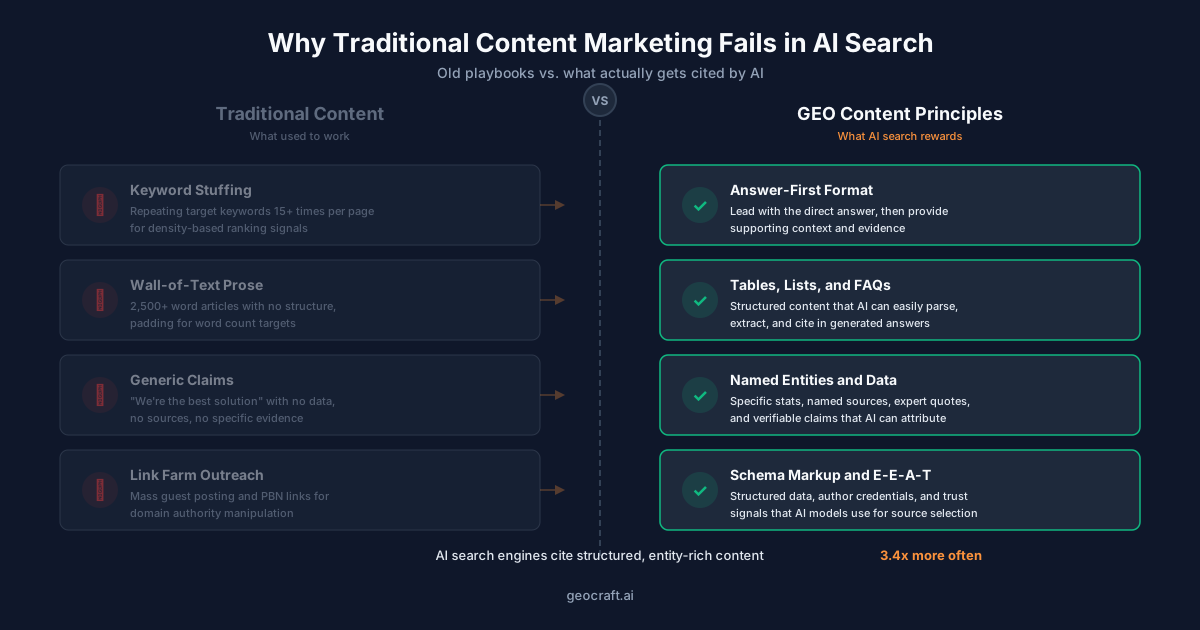
Every page and article should open with a direct, concise answer to the query it targets. AI models extract answers from the first 100-200 words of relevant content. If your intro buries the answer in context-setting preamble, you'll lose the citation.
Framework: State the answer in 2-3 sentences, then expand with supporting evidence and detail.
2. Factual Density
AI models cite content they can extract specific facts from. Generic marketing language ("industry-leading platform") gets skipped. Specific, attributable claims get cited.
Targets per article:
- 10+ specific numbers (prices, percentages, timeframes)
- 8+ named entities (brands, products, people)
- 3+ comparison statements
- 5+ direct answer sentences
3. Entity Clarity
AI models need to understand exactly what your brand is and does. Your content should repeatedly and consistently describe your brand with the same clear positioning.
Example: "GEOCraft is a Generative Engine Optimization platform that tracks brand citations across ChatGPT, Perplexity, and Google AI Overviews."
This sentence can be extracted by any AI model and attributed cleanly. Contrast with: "We help brands optimize their digital presence" — which is too vague for citation.
4. Structured Data and Schema
JSON-LD structured data helps AI engines understand your content's meaning. Key schema types for AI search optimization:
- FAQPage — question-and-answer pairs are extracted at very high rates
- Product — pricing, features, and availability
- Organization — brand identity and authority signals
- HowTo — step-by-step processes
- Article — author, publish date, and topic classification
5. Multi-Engine Optimization
ChatGPT, Perplexity, and Google AI Overviews each have different retrieval mechanisms:
- Perplexity uses real-time web search and cites sources directly with links
- ChatGPT draws from training data plus optional web browsing
- Google AI Overviews synthesizes from Google's index with heavy E-E-A-T weighting
- Claude uses training data with citation from provided sources
- Copilot uses Bing search results as its retrieval layer
Effective AI search optimization targets all five engines. Content that's optimized for only one engine leaves citations on the table.
How to Measure AI Search Optimization
You can't improve what you can't measure. Here's the measurement framework:
Core Metrics
| Metric | What It Measures | How to Track |
|---|---|---|
| Citation frequency | How often your brand is mentioned in AI answers | Automated query monitoring (GEOCraft) |
| Share of AI voice | Your citations vs. competitor citations | Competitive benchmarking |
| Citation context | How your brand is positioned (recommended, mentioned, compared) | Response analysis |
| Query coverage | % of target queries where you're cited | Query gap analysis |
| GEO Score | Composite metric of overall AI visibility | GEOCraft dashboard |
Measurement Cadence
- Weekly: Run target queries and track citation rate changes
- Monthly: Analyze competitive share shifts and content performance
- Quarterly: Review strategy against citation trends and adjust priorities
GEOCraft automates this entire measurement cycle, running your target queries against all major AI engines on a configurable schedule and surfacing citation gaps that need content attention.
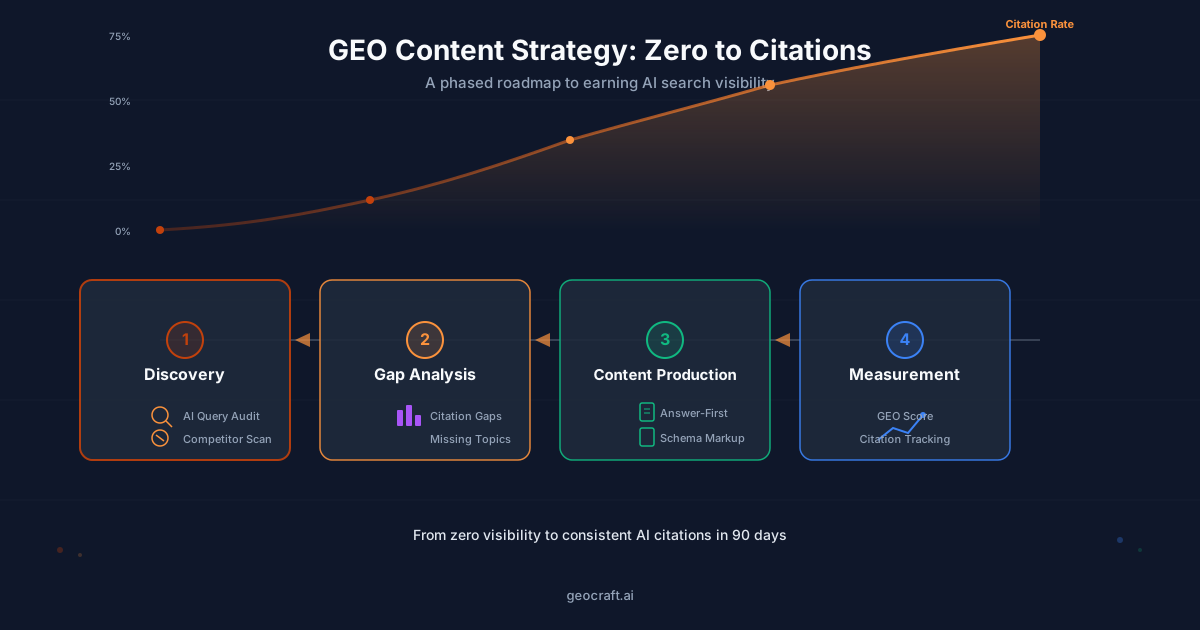
Getting Started: A 4-Week AI Search Optimization Sprint
Week 1: Baseline and Target Setting
- Define 15-25 target queries (what your buyers ask AI engines)
- Run a baseline scan across ChatGPT, Perplexity, and Google AI Overviews
- Document current citation rate and competitive landscape
- Prioritize queries by buyer intent and competitive gap
Week 2: Content Audit and Restructuring
- Audit your top 10 existing pages for AI citation readiness
- Restructure opening paragraphs to answer-first format
- Add comparison tables and FAQ sections
- Implement schema markup on key pages
Week 3: New Content Production
- Publish 3-5 new GEO-optimized articles targeting your highest-priority query gaps
- Focus on comparison content, how-to guides, and industry data
- Include specific numbers, named entities, and structured data in every piece
Week 4: Measurement and Iteration
- Re-run baseline queries and compare citation rates
- Identify which content changes drove citations
- Plan the next sprint based on remaining gaps
Expected results: Most teams see their first AI citations within 2-4 weeks. Citation rates typically double within 8-12 weeks of consistent execution.
Tools for AI Search Optimization
| Tool | Focus | AI Engines Covered |
|---|---|---|
| GEOCraft | Full GEO lifecycle (tracking + content + publishing) | ChatGPT, Perplexity, Google AI Overviews, Claude, Copilot |
| Semrush | Traditional SEO with limited AI features | Google AI Overviews only |
| Ahrefs | Backlink analysis and SEO | Limited AI coverage |
| Manual testing | Free but doesn't scale | Any (one at a time) |
GEOCraft is the only platform purpose-built for AI search optimization, combining citation tracking, content creation, and automated publishing in a single workflow. Start with a free baseline scan to see your current AI visibility.