Most B2B content strategies were designed for a world where Google was the only search engine that mattered. That world ended in 2025.
Why Your Current Content Strategy Has a GEO Blind Spot
Your content team probably publishes blog posts, whitepapers, case studies, and landing pages. Your SEO team probably tracks rankings, organic traffic, and keyword positions. You may even track social media mentions and share of voice.
But none of those metrics tell you whether AI engines are citing your brand.
Consider this: when a VP of Marketing asks Perplexity "what are the best tools for tracking AI search visibility," Perplexity generates an answer citing 3-5 specific brands. If yours isn't one of them, that buyer never learns you exist — and your entire content library was irrelevant to that moment.
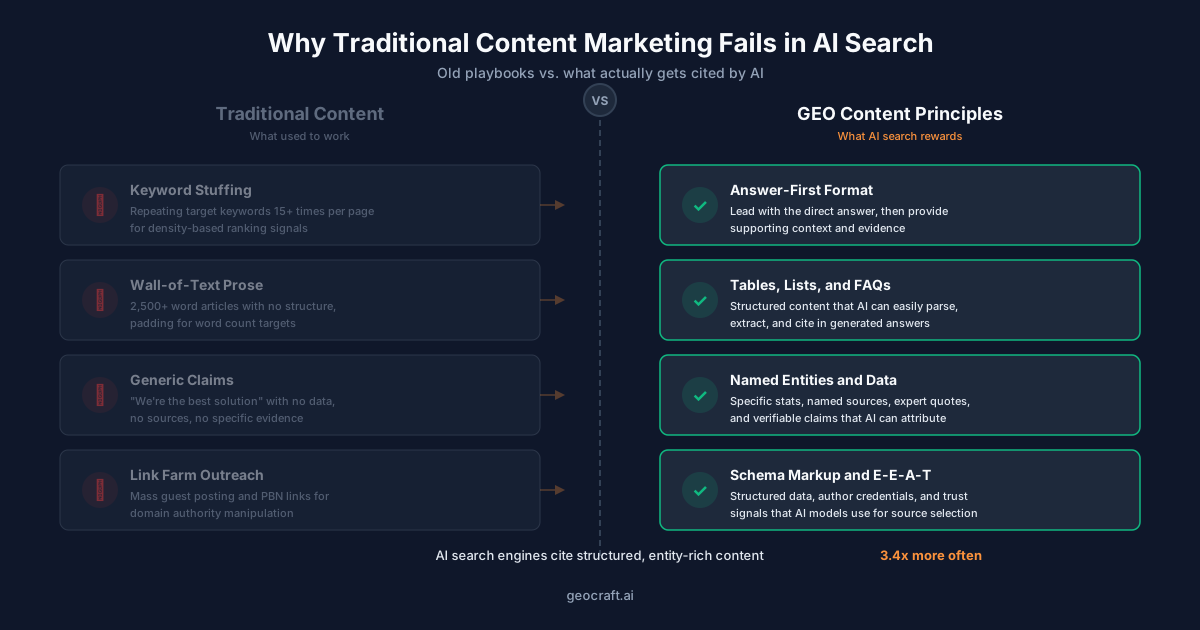
The gap isn't content quantity. It's content structure. Companies with hundreds of blog posts can be completely invisible in AI answers because their content is structured for Google rankings, not AI extraction.
The GEO Content Strategy Framework
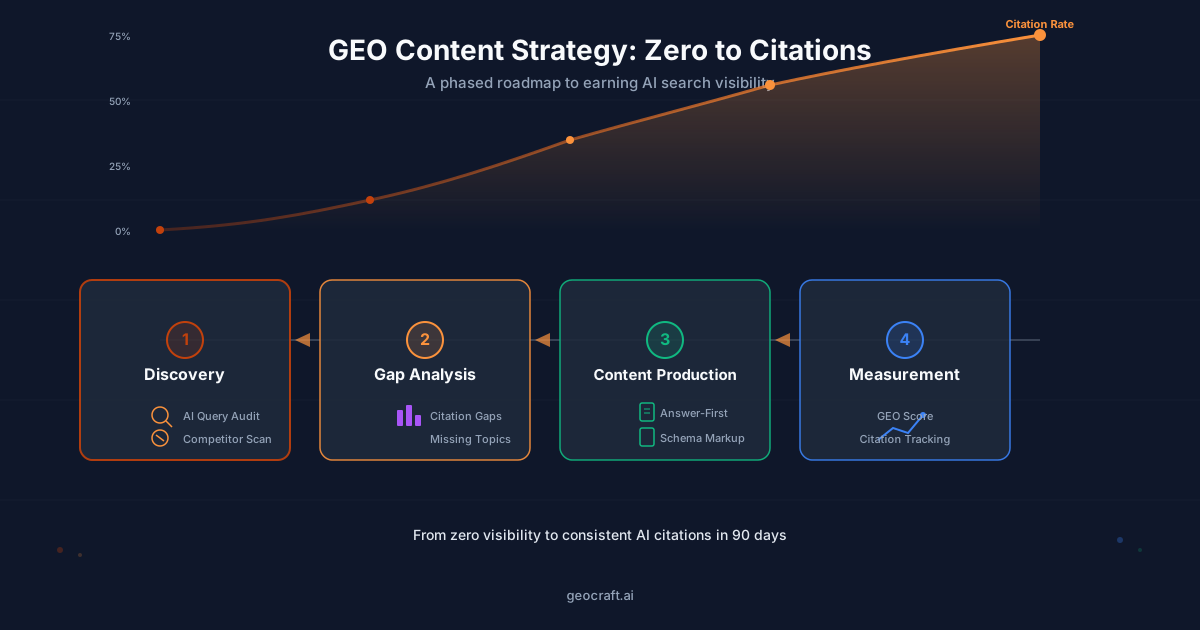
Phase 1: Discovery (Week 1)
Target Query Mapping Identify 25-50 queries that your ideal buyers ask AI engines. Focus on:
- Purchase-intent queries ("best X tool for Y")
- Comparison queries ("X vs Y")
- Problem-solution queries ("how to solve Z")
- Category queries ("what is X")
Priority ranking: Score each query by buyer intent (high/medium/low) and competitive density (how many brands are already being cited).
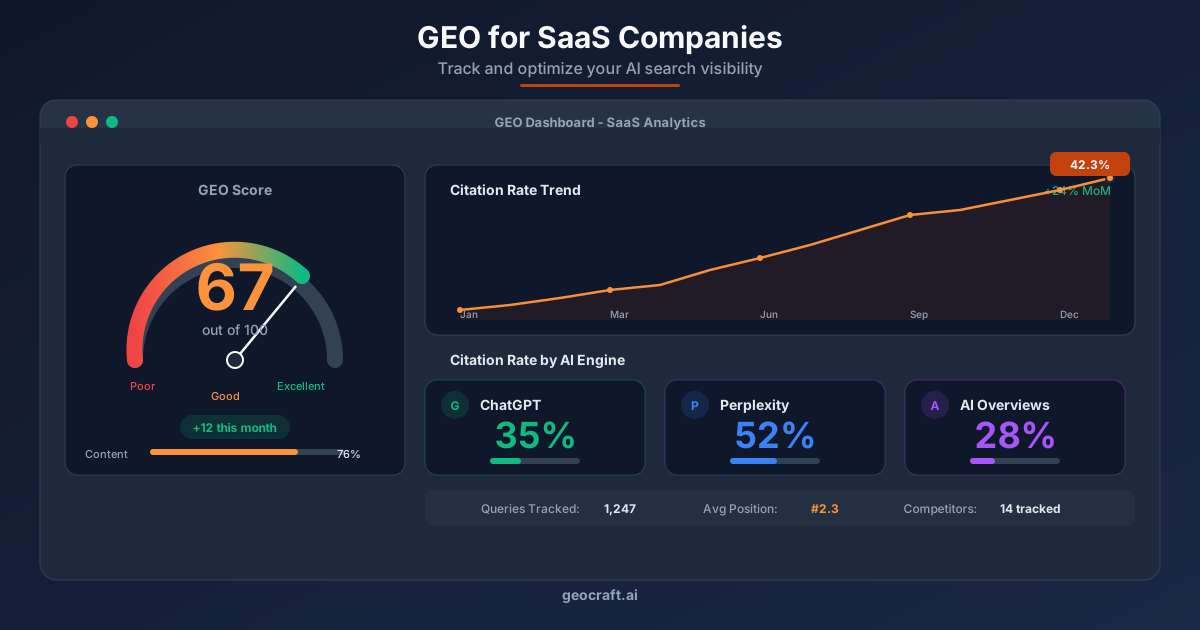
Baseline Measurement Run every target query across ChatGPT, Perplexity, and Google AI Overviews. Document:
- Whether your brand is cited (yes/no)
- Which competitors are cited
- How the AI positions each cited brand
- The source content each citation draws from
GEOCraft automates this entire baseline process — configure your queries and competitor domains, and the platform runs the scan across all engines.
Phase 2: Gap Analysis (Week 2)
With your baseline data, categorize your target queries:
| Category | Description | Action |
|---|---|---|
| Cited | Your brand appears in AI answers | Maintain and optimize existing content |
| Competitive gap | Competitors are cited, you're not | Create new content targeting these queries |
| Open opportunity | No brands are consistently cited | First-mover advantage — create content now |
| Low intent | The query isn't driving purchase decisions | Deprioritize |
Most companies find that 70-80% of their target queries fall into "competitive gap" or "open opportunity." That's the content roadmap.
Phase 3: Content Production (Weeks 3-8)
Weekly cadence: Publish 3-5 GEO-optimized articles per week, prioritized by the gap analysis.
Content types that drive citations:
-
Comparison articles — "[Your Brand] vs [Competitor]" and "Best [Category] tools" pieces are the highest-citation content type for purchase-intent queries.
-
How-to guides — Step-by-step guides with specific tools, configurations, and examples get cited for problem-solution queries.
-
Data-driven research — Original data and analysis ("We tracked X across Y over Z period") gets cited at 3-5x the rate of opinion-based content.
-
Category definitions — "What is [Term]" articles optimized for AI extraction are essential for category queries.
-
Case studies with specific numbers — "How [Customer] achieved [Specific Result] in [Timeframe]" articles get cited for proof-point queries.
GEO content production checklist:
- Answer-first opening (2-3 sentences, directly answers the target query)
- 10+ specific numbers per article
- 8+ named entities per article
- At least one comparison table
- FAQ section with 3-5 Q&A pairs
- FAQPage schema markup
- Clear brand positioning statement
Phase 4: Measurement and Optimization (Ongoing)
Weekly:
- Re-run target queries and compare citation rates to baseline
- Identify which new articles are generating citations
- Flag articles that aren't performing for structural optimization
Monthly:
- Analyze competitive share trends
- Identify new queries to add to the target list
- Refresh older content with updated data and comparisons
Quarterly:
- Full strategy review against citation rate goals
- Adjust content mix based on what's driving the most citations
- Update competitive landscape assessment
Content Production at Scale with GEOCraft
GEOCraft isn't just a measurement tool — it's a content production platform. Here's how it fits into the GEO content strategy workflow:
1. Query Discovery
GEOCraft identifies target queries based on your industry, competitors, and existing content. It surfaces the queries where your citation gap is largest.
2. Content Generation
GEOCraft creates GEO-optimized articles with the answer-first structure, factual density, and entity clarity that AI engines look for. Each article is tailored to a specific target query or cluster.
3. WordPress Publishing
The GeoCraft WordPress plugin pushes finished articles directly to your site with SEO metadata, featured images, and category assignments. No manual copy-paste step.
4. Citation Tracking
GEOCraft monitors your target queries on a configured schedule, tracking citation rate changes and identifying which content is driving results.
5. Optimization Loop
When citation rates plateau or drop, GEOCraft flags the content that needs refreshing and suggests specific structural improvements.
Realistic Timelines: What to Expect
Based on GEOCraft customer data across B2B SaaS, professional services, and e-commerce brands:
| Timeline | Expected Results |
|---|---|
| Week 2-3 | First Perplexity citations (real-time retrieval) |
| Week 3-4 | First Google AI Overview citations |
| Week 4-6 | First ChatGPT citations |
| Week 8-12 | Citation rate doubles from baseline |
| Month 4-6 | 25-40% citation rate on target queries |
| Month 6+ | Sustainable competitive position in AI answers |
Important: These timelines assume consistent weekly content production (3-5 articles/week) and regular measurement cycles. Sporadic publishing produces sporadic results.
Common Mistakes in GEO Content Strategy
-
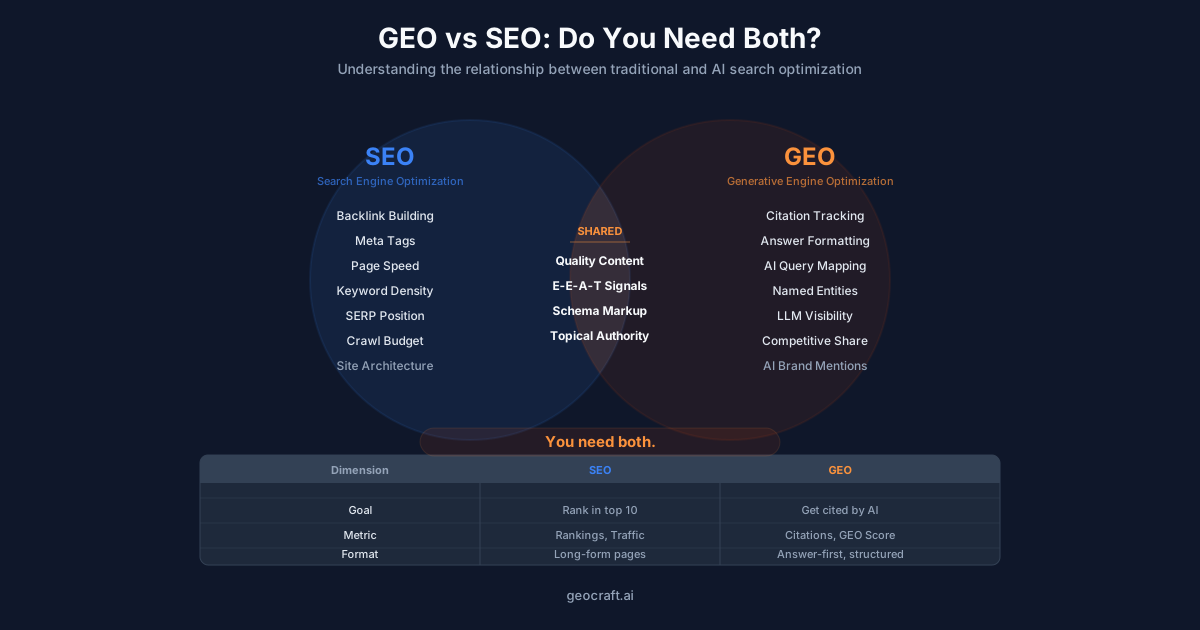
Treating GEO as an SEO add-on. GEO requires different content structure, different metrics, and different optimization techniques. Bolting it onto your existing SEO workflow doesn't work.
-
Publishing without measuring. If you're not tracking citation rates, you can't tell what's working. Weekly measurement is the minimum cadence.
-
Optimizing for one AI engine. ChatGPT, Perplexity, and Google AI Overviews have different retrieval mechanisms. Multi-engine optimization catches the citations single-engine strategies miss.
-
Ignoring content freshness. AI engines increasingly weigh recency. A great article from 6 months ago may lose citations to a mediocre article published last week.
-
Writing for volume over structure. Ten properly structured articles outperform fifty unstructured ones for AI citation purposes.
Start your GEO content strategy with a free baseline scan from GEOCraft to see where your brand stands today.