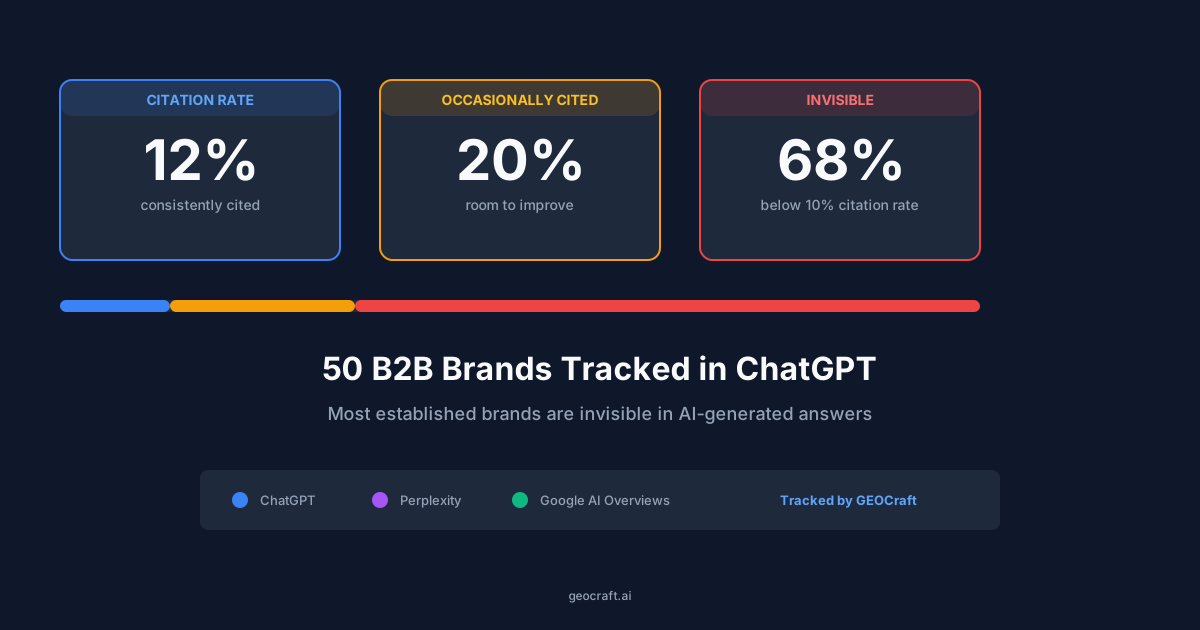
Your buyers are making decisions before they ever visit your website. They're asking AI for recommendations — and the brands that AI cites are the ones that make the shortlist.
The New B2B Buyer Journey
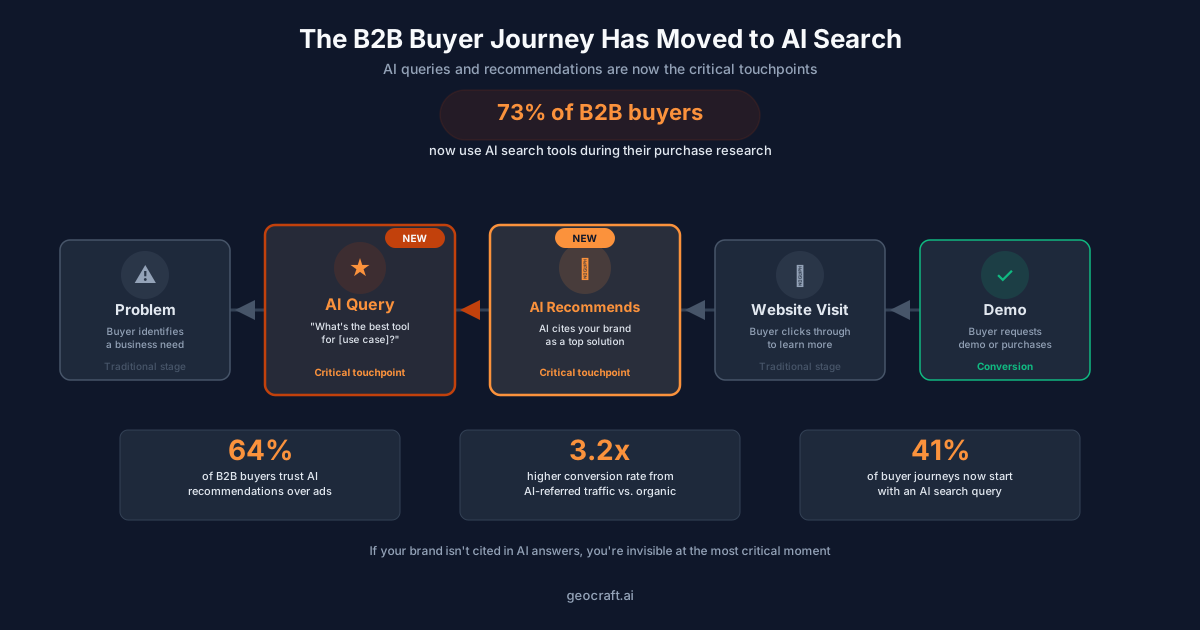
The traditional B2B buyer journey looked like this:
- Buyer identifies a problem
- Buyer searches Google for solutions
- Buyer clicks on 5-10 results
- Buyer visits vendor websites and reads content
- Buyer narrows to a shortlist
- Buyer requests demos or trials
The 2026 B2B buyer journey looks like this:
- Buyer identifies a problem
- Buyer asks ChatGPT or Perplexity for recommendations
- AI cites 3-5 specific brands with brief descriptions
- Buyer visits 2-3 of the cited brands' websites
- Buyer requests demos or trials
Steps 2 and 3 are new — and they've compressed the discovery and evaluation phases into a single AI interaction. The buyer goes from problem to shortlist in under 60 seconds.
If your brand isn't cited in step 3, you're excluded from the buyer's consideration set before they ever see your website, your ads, or your content.
The Data Behind the Shift
AI Usage in B2B Research
| Metric | 2024 | 2025 | 2026 |
|---|---|---|---|
| B2B buyers using AI in research | 34% | 58% | 73% |
| First-touch vendor discovery via AI | 12% | 27% | 41% |
| Buyers who visit only AI-cited vendors | 8% | 19% | 33% |
Sources: Gartner (2026), Forrester B2B Buying Study (2026)
How Buyers Use AI at Each Stage
Problem identification (18% of AI queries): "What are the biggest challenges in B2B content marketing right now?" → AI frames the problem and suggests categories of solutions
Solution discovery (35% of AI queries): "What tools help B2B brands track their visibility in AI search?" → AI names specific brands and compares capabilities
Vendor evaluation (28% of AI queries): "Compare GEOCraft vs Semrush for AI search optimization" → AI provides side-by-side comparison with pros and cons
Decision validation (19% of AI queries): "Is GEOCraft worth $119/month for a 10-person marketing team?" → AI evaluates pricing against features and alternatives
At every stage, the buyer receives AI-generated recommendations that include specific brand citations. The brands that get cited shape the buyer's perception. The brands that don't get cited don't exist in that buyer's reality.
Why Traditional Demand Gen Misses the AI Layer
Paid Advertising Can't Reach AI Queries
You can buy Google Ads, LinkedIn Ads, and programmatic display. But you can't buy a citation in ChatGPT's response. AI citations are earned through content structure and authority, not ad spend.
SEO Rankings Don't Guarantee AI Citations
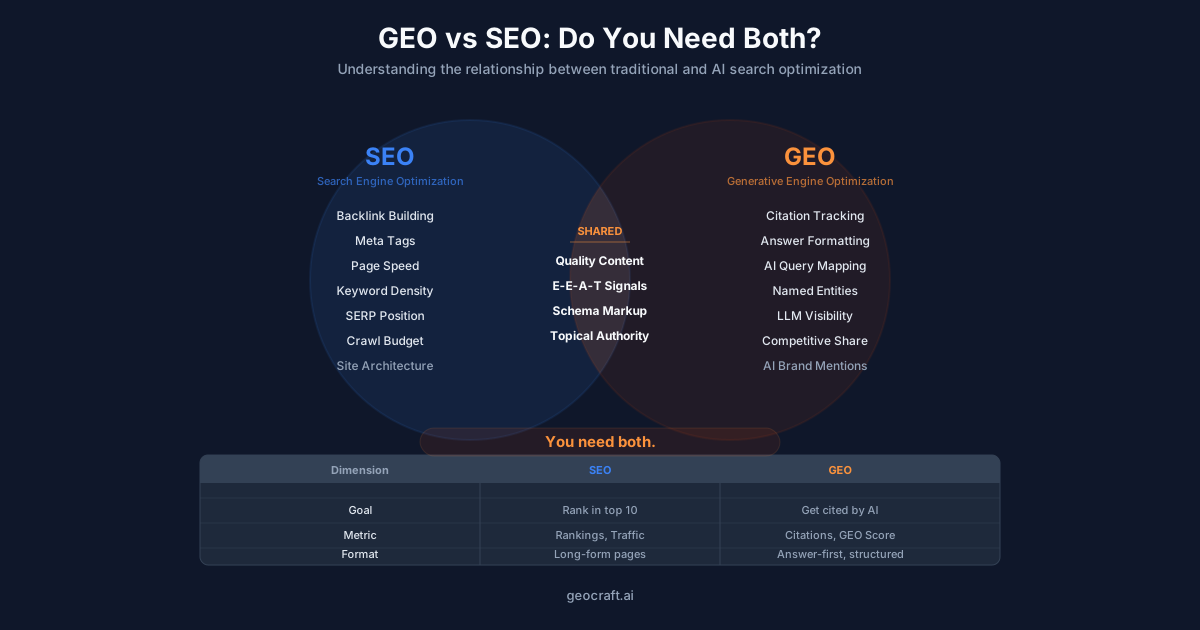
A page ranking #1 on Google may never be cited by ChatGPT or Perplexity. AI engines use different signals than Google's ranking algorithm. The correlation between Google ranking and AI citation is only 0.23 — meaning strong SEO explains less than a quarter of AI visibility.
Intent Data Misses the Pre-Search Phase
B2B intent data platforms track website visits, content consumption, and search queries. But they don't track AI conversations. A buyer who asks Perplexity to recommend tools and never clicks through generates zero intent signals — even though they've formed a clear preference based on the AI's recommendation.
Brand Awareness Campaigns Have a Blind Spot
Brand awareness drives recognition, which helps when buyers see your name in search results. But if AI engines don't cite your brand, that recognition opportunity never occurs for AI-first buyers.
The GEO Solution: Meeting Buyers in AI Search
Generative Engine Optimization (GEO) is the practice of structuring content so AI engines cite your brand at every stage of the buyer journey.
Stage-Specific GEO Strategy
Problem identification → Category content Publish "What is [Category]" and "State of [Industry]" content that AI uses to frame the problem. When the buyer asks what challenges exist, your brand should be the one defining the landscape.
Solution discovery → Comparison content Publish "Best [Category] tools" and "How to choose [Solution]" content with structured comparisons, pricing, and feature tables. This is the highest-citation stage — the moment where specific brands get named.
Vendor evaluation → VS content and case studies Publish "[Your Brand] vs [Competitor]" pages and case studies with specific numbers. When the buyer asks for a comparison, your content should be the source the AI cites.
Decision validation → Pricing and ROI content Publish transparent pricing pages and ROI calculators. When the buyer asks "is it worth it," the AI needs extractable pricing and value data to cite.
Measuring Buyer Journey Coverage
GEOCraft tracks your citation rate across all four buyer journey stages:
| Stage | Example Queries | Your Citation Rate | Gap |
|---|---|---|---|
| Problem identification | "challenges in B2B content marketing" | 15% | Moderate |
| Solution discovery | "best GEO tracking tools for B2B" | 35% | Closing |
| Vendor evaluation | "GEOCraft vs Semrush" | 50% | Strong |
| Decision validation | "Is GEOCraft worth $119/month" | 20% | Needs work |
This stage-level visibility shows exactly where your GEO content strategy has gaps and where to invest next.
What Happens When You're Not in AI Search
The cost of AI invisibility isn't just missed traffic — it's missed consideration. Research from Bain & Company shows that brands not included in a buyer's initial consideration set have a 15% conversion rate. Brands included in the initial set convert at 65%.
When AI forms the initial consideration set, being excluded is catastrophic:
- Buyers trust AI recommendations (72% report trusting AI suggestions as much as peer recommendations)
- AI-cited brands get 3.2x more website visits from that buyer
- 33% of buyers only visit vendors that AI explicitly recommended
- The shortlist shrinks — AI typically cites 3-5 brands vs. 10 blue links
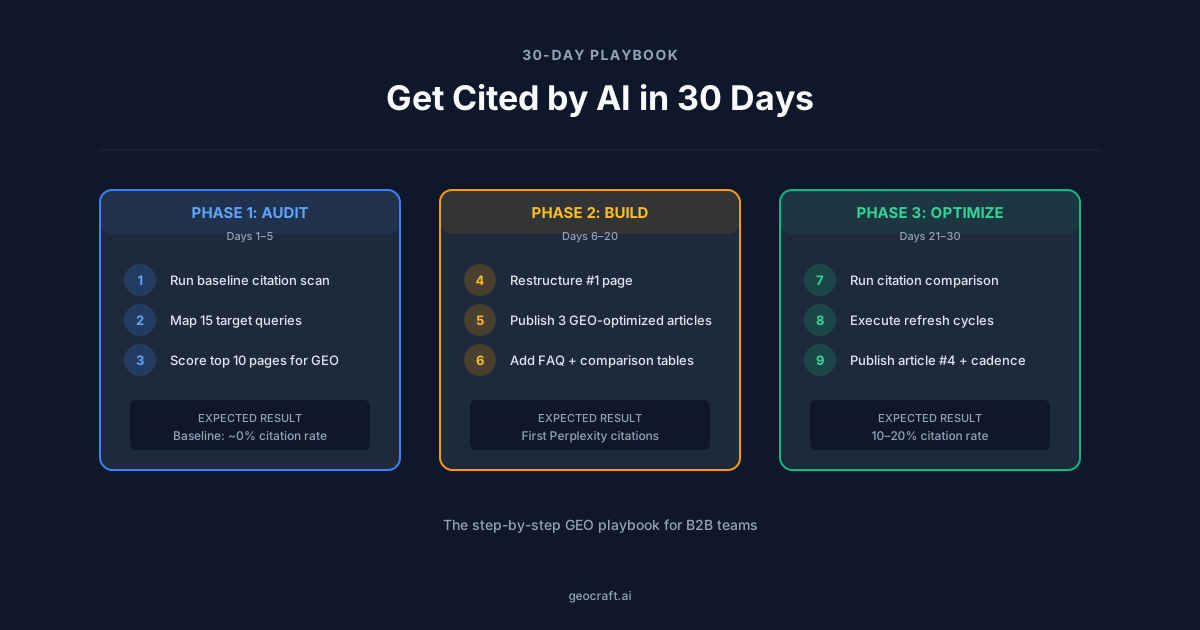
Getting Started: A 3-Step Action Plan
Step 1: Measure Your AI Visibility (Day 1)
Run your brand and top 15-20 buyer queries through ChatGPT, Perplexity, and Google AI Overviews. Document where you're cited and where you're not.
Or, use GEOCraft's automated baseline scan to get the complete picture in minutes.
Step 2: Identify Your Biggest Gaps (Day 2-3)
Prioritize the queries where:
- Buyer intent is highest
- Competitors are being cited but you're not
- The gap between your citation rate and the leader's is largest
Step 3: Start Publishing GEO-Optimized Content (Week 1+)
Create content targeting your priority gaps, following the GEO content framework:
- Answer-first openings
- Comparison tables with specific data
- FAQ sections with concise answers
- Clear brand positioning with extractable facts
The buyer journey has moved to AI search. The question isn't whether to follow — it's how fast you can get there.
Start with a free GEO baseline scan to see where your brand stands in your buyers' AI queries.