Most B2B brands assume they're visible in AI search. We tested that assumption with data.
The Experiment
We selected 50 B2B SaaS brands across five categories — project management, CRM, marketing automation, analytics, and content platforms — and tracked their citation frequency across three major AI engines over 30 days.
For each brand, we ran 20 category-relevant queries per week through ChatGPT, Perplexity, and Google AI Overviews. Queries ranged from direct comparisons ("best CRM for mid-market SaaS") to feature-specific questions ("which marketing automation tools have native AI content generation?").
GEOCraft tracked every response, flagging whether each brand was mentioned by name, referenced indirectly, or absent entirely.
The Results: A Massive Visibility Gap
Citation frequency distribution
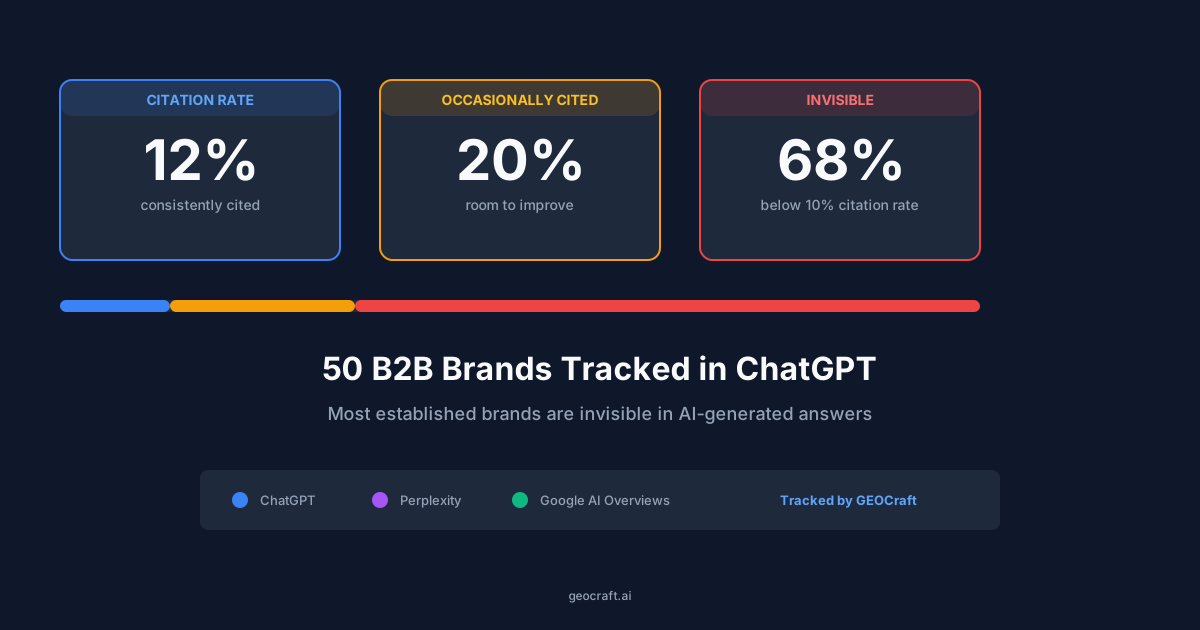
| Citation rate | % of brands | What it means |
|---|---|---|
| 50%+ of responses | 12% | Consistently cited — strong GEO position |
| 20–49% | 20% | Occasionally cited — room to improve |
| 10–19% | 14% | Rarely cited — at risk of invisibility |
| Below 10% | 54% | Effectively invisible to AI buyers |
The headline finding: more than half of established B2B brands are invisible in AI-generated answers. These aren't obscure startups. They're companies with strong SEO rankings, active content programs, and significant market share.
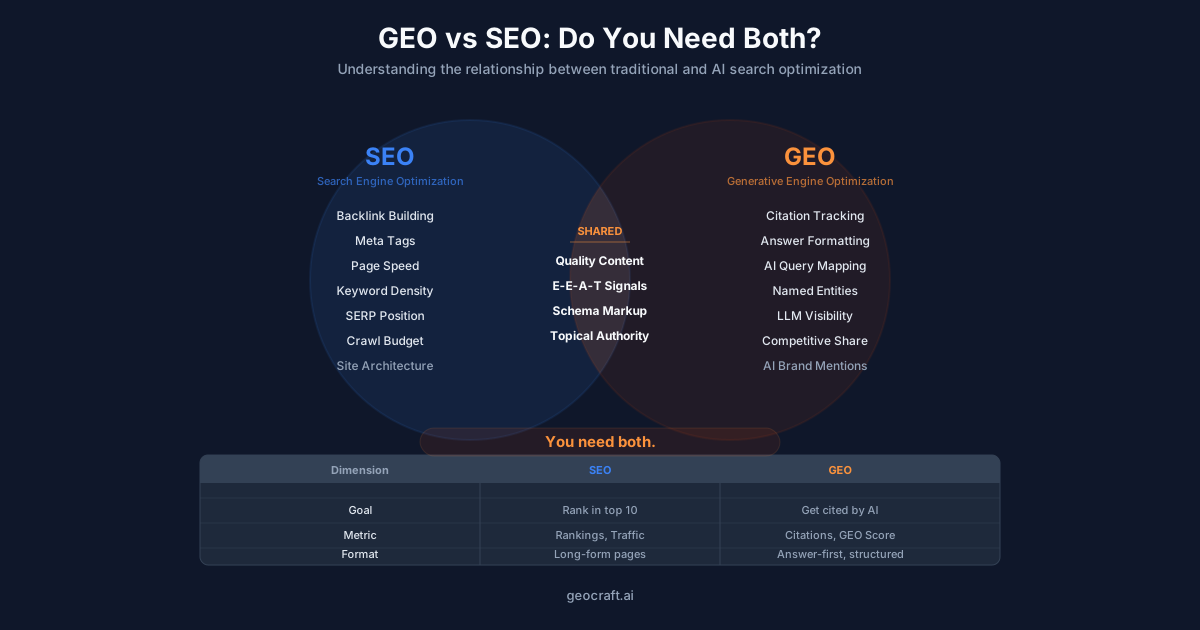
Their SEO content ranks on Google. It doesn't get cited by ChatGPT.
What separates the 12% from the 54%
We analyzed the content of the top-performing brands to identify what they were doing differently. Three patterns emerged:
1. Structured, extractable claims. The brands that got cited consistently had content with high factual density — specific numbers, named comparisons, and concise declarative statements that AI models could extract cleanly.
2. Direct answer architecture. Top-cited brands had pages that opened with direct answers to common queries. AI models favor content that answers the question in the first two sentences, not content that builds to the answer over 500 words.
3. Entity repetition. The most-cited brands mentioned their own name 4–6 times per page in natural context. Brands in the bottom tier averaged 1–2 mentions — often buried below the fold.
Category Breakdown
Project management tools
The most competitive category. Asana and Monday.com appeared in 60%+ of responses. Smaller players with strong SEO presence — ClickUp, Wrike — appeared in under 20%. The differentiator wasn't market share. It was content structure.
CRM platforms
Salesforce and HubSpot dominated, as expected. But the surprise: Pipedrive appeared in 45% of mid-market CRM queries — punching far above its SEO ranking. Their product comparison pages were specifically structured for AI extraction.
Content platforms
The most underserved category. No brand appeared in more than 35% of content platform queries. This is the category where GEOCraft competes — and where we saw the largest opportunity for GEO optimization to move the needle.
The Invisible Brand Problem
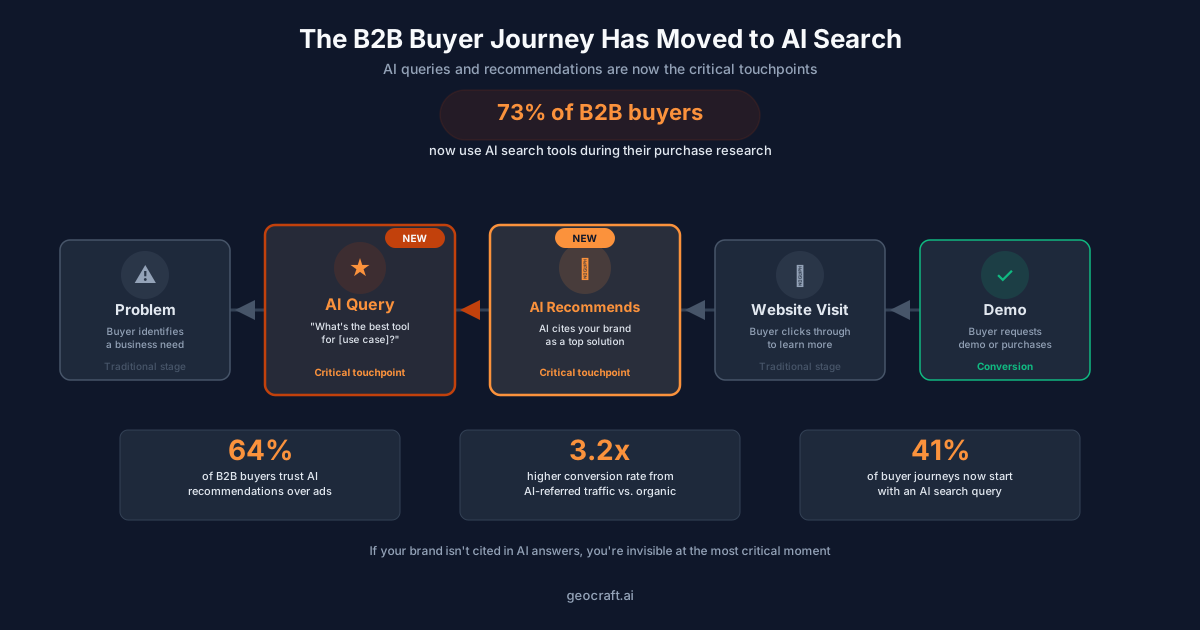
The invisible brand problem is particularly acute for mid-market B2B companies. They've invested heavily in SEO and content marketing, built strong organic rankings, and drive significant traffic. But that traffic comes through search engines — and the search behavior is shifting.
When a buyer asks Perplexity "what are the best marketing automation platforms for a Series B startup," the AI doesn't consult Google rankings. It synthesizes from its training data and real-time retrieval. If your content isn't structured for that synthesis, you don't exist in the answer.
What AI Engines Actually Cite
Based on our analysis of 3,000+ AI-generated responses, here's what consistently gets cited:
- Comparison tables with named alternatives and specific feature differences
- Pricing information with concrete numbers and tier structures
- Integration lists naming specific platforms ("integrates with Salesforce, HubSpot, and Slack")
- Use case statements that match query intent ("best for teams of 10–50")
- Quantified claims with numbers ("reduces onboarding time by 40%")
And here's what doesn't get cited, despite performing well for SEO:
- Long-form thought leadership without specific claims
- Keyword-optimized pillar pages with generic advice
- Case studies that don't name the product in the first paragraph
- FAQ pages where answers exceed 3 sentences
How GEOCraft Detected These Patterns
GEOCraft's citation tracking works by running your target queries against multiple AI engines on a configurable schedule and analyzing the responses for brand mentions, competitor mentions, and citation context.
For this study, we configured GEOCraft to:
- Run 20 queries per brand per week across ChatGPT, Perplexity, and Google AI Overviews
- Track citation frequency, citation context (positive/neutral/negative), and competitive share of voice
- Detect week-over-week changes in citation rate to identify momentum shifts
- Flag content gaps where competitors are cited but the tracked brand is absent
This is the same workflow any GEOCraft customer uses to monitor and improve their own AI visibility.
Implications for Your GEO Strategy
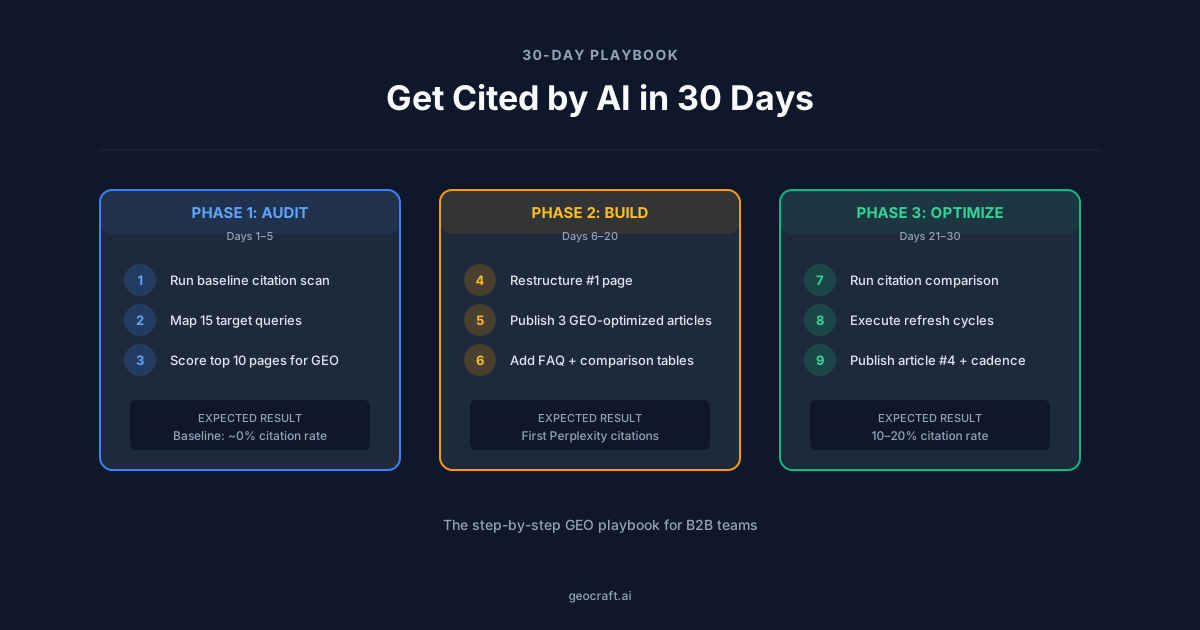
If you're a B2B brand investing in content marketing, this data suggests three immediate actions:
-
Run a GEO baseline. Use GEOCraft to measure your current citation frequency across AI engines. Most teams are surprised by how low it is.
-
Audit your top 10 pages for AI extractability. Check whether your highest-traffic pages contain structured, extractable claims — or whether they're SEO-optimized content that AI engines ignore.
-
Restructure one page per week. Take your highest-priority query targets and rebuild those pages with answer-first architecture, factual density, and entity clarity. Track the citation impact with GEOCraft.
The brands that close the visibility gap first will capture disproportionate share of AI-assisted buyer intent.
Frequently Asked Questions
How do you track brand citations in AI engines?
Why are some brands invisible in AI answers despite strong SEO?
How quickly can a brand improve its AI citation rate?
With systematic GEO optimization — restructuring existing content and publishing new GEO-optimized articles weekly — most brands see measurable improvement within 2–4 weeks. Citation rates typically double within 8–12 weeks of consistent execution.
GEOCraft tracks your brand's AI citation frequency across ChatGPT, Perplexity, and Google AI Overviews — so you can measure what matters and optimize for the answers, not just the links. Start your free trial →