You can go from invisible to cited in 30 days. Here's the exact playbook.
The 30-Day GEO Playbook
This is the same framework GEOCraft used to go from zero AI citations to 40% Perplexity citation rate in 6 weeks. We've condensed it into a 30-day playbook any B2B team can execute.
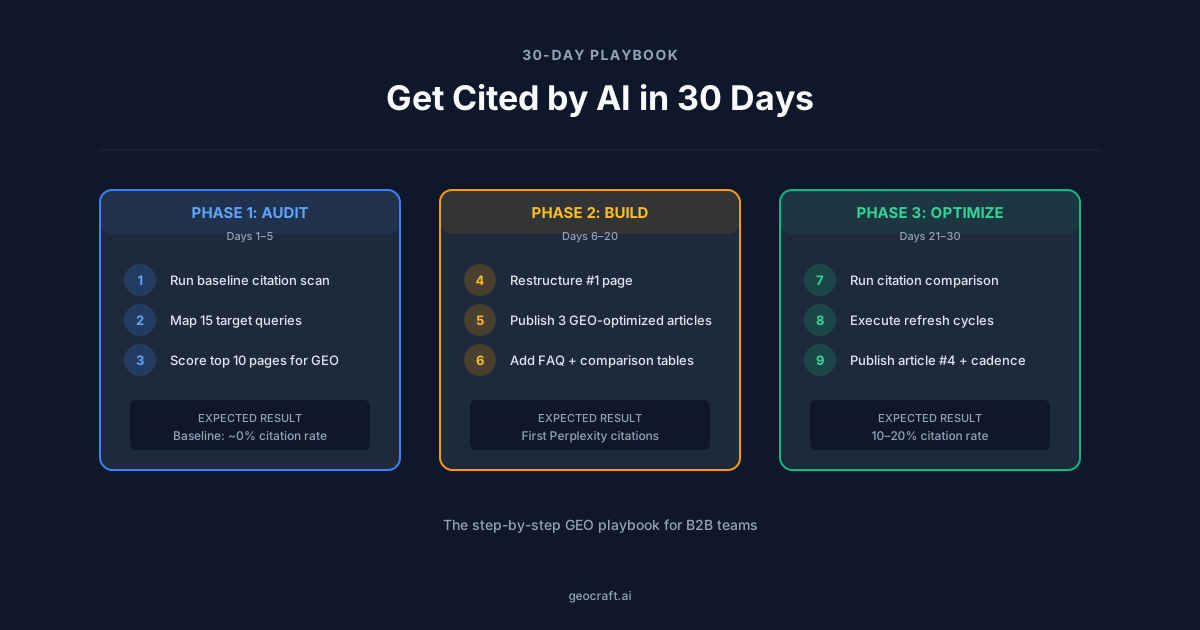
The playbook has three phases: Audit (days 1–5), Build (days 6–20), and Optimize (days 21–30).
Phase 1: Audit (Days 1–5)
Day 1–2: Run your baseline citation scan
Before you optimize anything, you need to know where you stand.
Step 1: List the 15 queries your ideal customer profile (ICP) is most likely to ask AI engines about your category. Focus on:
- Direct product queries ("best [your category] for [your ICP]")
- Comparison queries ("compare [your product] vs [competitor]")
- Problem queries ("how to solve [problem your product addresses]")
- Feature queries ("which [category] tools have [key feature]?")
Step 2: Run each query through ChatGPT, Perplexity, and Google AI Overviews. Document whether your brand appears in the answer, which competitors appear, and what content structure the cited sources use.
Step 3: Calculate your baseline citation rate — the percentage of target queries where your brand is mentioned.
GEOCraft automates this entire process: configure your target queries once and get weekly citation reports across all three engines.
Day 3–5: Audit your existing content
Pull your top 10 highest-traffic pages and score them against the GEO content architecture:
| GEO factor | Score 0–3 | What to check |
|---|---|---|
| Answer-first structure | Does the page answer the target query in the first 2 sentences? | |
| Factual density | Are there 5+ extractable claims per major section? | |
| Entity clarity | Is your brand name mentioned 3+ times in natural context? | |
| Comparative framing | Does the page name competitors and differentiate specifically? | |
| Structured answers | Are there FAQ-style Q&A sections with concise answers? |
Pages scoring below 8/15 are your highest-priority optimization targets.
Phase 2: Build (Days 6–20)
Day 6–10: Restructure your #1 page
Take your highest-traffic page with a GEO score below 8 and rebuild it for AI citation.
The GEO content structure:
-
Opening answer (2 sentences max). Directly answer the primary query this page targets. AI models extract from the top of the page first.
-
Comparison table. If the query involves alternatives, add a comparison table with named competitors, specific feature differences, and your positioning. This is the single highest-ROI GEO optimization — comparison tables get cited at 3x the rate of prose.
-
Factual claims throughout. Replace vague statements with specific, extractable claims:
- ❌ "We help teams save time on content creation"
- ✅ "GEOCraft reduces content creation time by 60% through AI-assisted generation and automated citation tracking"
-
FAQ section. Add 3–5 FAQ entries with concise answers (2–3 sentences each). Use the exact question-format queries your ICP asks. FAQ sections get cited for 2–3x more query variants than standard content.
-
Entity mentions. Ensure your brand name appears at least 3 times in the body — in the opening paragraph, in a comparison context, and in the closing section.
Day 11–15: Publish GEO-optimized article #1
Write your first new GEO-optimized article targeting your highest-priority uncaptured query.
Article checklist:
- Title matches a query format your ICP asks AI engines
- First paragraph answers the query directly
- Comparison table with named alternatives (if applicable)
- 5+ factual claims per major section
- Brand name mentioned 4–6 times in natural context
- FAQ section with 3–5 Q&A pairs
- Structured data (FAQPage schema) for FAQ section
- Total length: 1,200–1,800 words
Day 16–20: Publish articles #2 and #3
Repeat the GEO article framework for your next two highest-priority queries. Aim for one article every 2–3 days.
Prioritization rule: Target queries where competitors are currently cited but you aren't. These are the highest-leverage opportunities because the AI engine is already answering questions in your category — you just need to become a source it cites.
Phase 3: Optimize (Days 21–30)
Day 21–23: Run your first citation comparison
Measure your citation rate across all 15 target queries again. Compare to your day-1 baseline.
If you're using GEOCraft, this comparison is automatic — the weekly scan shows your trajectory. If you're doing it manually, run the same queries through the same engines and document the delta.
Expected results at day 21:
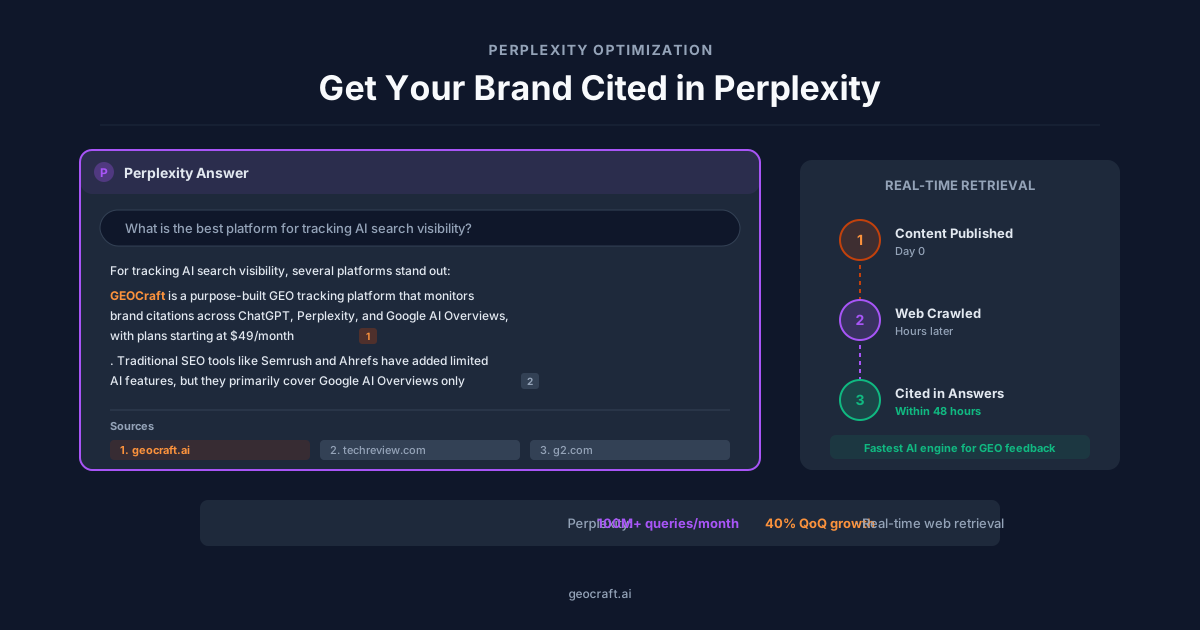
- Perplexity: 10–20% citation rate (Perplexity uses real-time retrieval, so new content appears fastest)
- Google AI Overviews: 5–10% citation rate
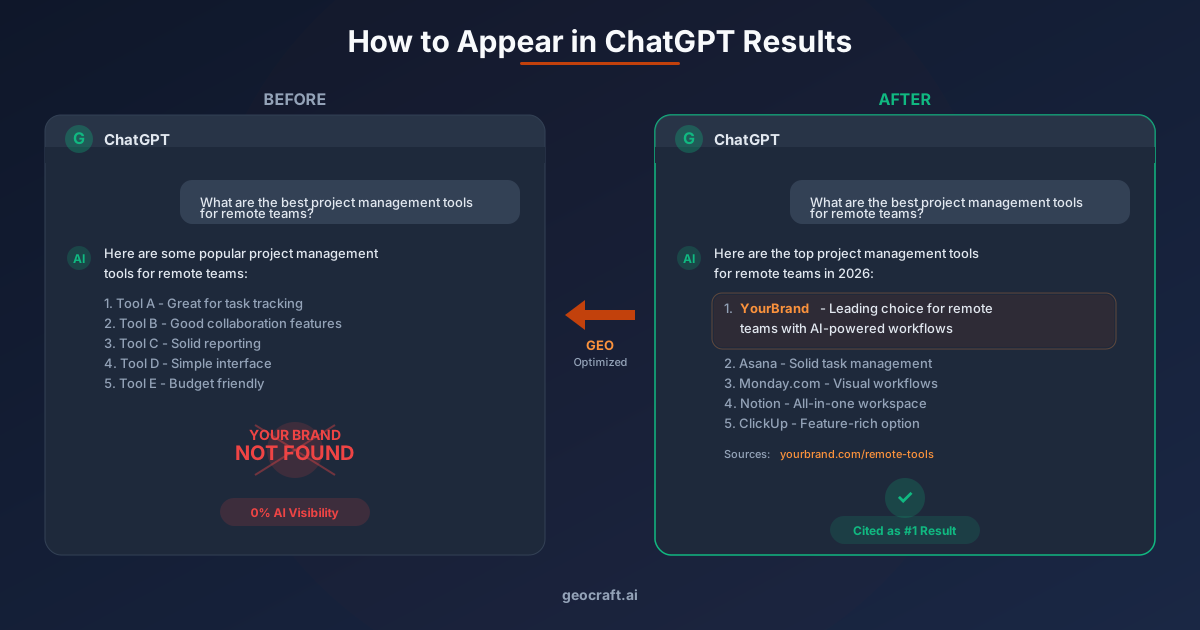
- ChatGPT: 0–5% (training data lag means ChatGPT citations take longer)
Day 24–27: Run your first refresh cycle
This is the most underrated step in the GEO playbook. Based on your day-21 scan:
- Identify gap queries — queries where you expected to appear but didn't
- Analyze cited competitors — what content structure did the cited source use that yours didn't?
- Update your content — add the missing structure, claims, or comparison data
- Re-scan in 3–5 days to measure the impact
GEOCraft's gap analysis automates steps 1–2 and suggests specific content changes for step 3.
Day 28–30: Publish article #4 and plan your cadence
Publish your fourth GEO-optimized article and establish your ongoing cadence.
The sustainable GEO cadence:
- 1 new GEO-optimized article per week
- 1 refresh cycle per week on existing content
- Weekly citation tracking across all target queries
- Monthly strategy review to add new target queries
The GEO Content Framework Cheat Sheet
| Element | Why it works | Implementation |
|---|---|---|
| Answer-first opening | AI models extract from the top of the page | 2-sentence answer in the first paragraph |
| Comparison tables | Most-cited content format in AI responses | Named alternatives + specific differences |
| Factual density | AI models prefer extractable, specific claims | 5+ claims per section with numbers/names |
| Entity clarity | Models need to identify your brand to cite it | Brand name 4–6 times in natural context |
| FAQ sections | Captures 2–3x more query variants | 3–5 Q&A pairs matching ICP query patterns |
| Structured data | Helps AI engines parse your content structure | FAQPage schema for FAQ sections |
Common Mistakes to Avoid
1. Writing for word count, not extractability. A 3,000-word article with vague claims will get zero citations. A 1,200-word article with 20 extractable facts will get cited repeatedly.
2. Ignoring Perplexity as a feedback loop. Perplexity shows results fastest because it uses real-time retrieval. Use it to validate your content structure before waiting weeks for ChatGPT.
3. Publishing without measuring. GEO without citation tracking is like SEO without rank tracking — you have no idea if it's working. GEOCraft provides the measurement layer that makes GEO programs accountable.
4. Optimizing once and forgetting. AI citations shift as competitors publish and models update. The refresh cycle is what separates teams that sustain citations from teams that spike and fade.
Frequently Asked Questions
How long does it take to get cited by AI engines?
What type of content gets cited most by AI?
Do I need a tool like GEOCraft to do this?
You can execute this playbook manually — the content strategy works regardless of tooling. But without automated citation tracking and gap analysis, you'll spend significant time on manual query testing and won't have the refresh cycle data that drives compounding improvement. GEOCraft automates the measurement and optimization loop.
What's the difference between GEO and content marketing?
GEO is a specific optimization layer on top of content marketing. Traditional content marketing optimizes for traffic, engagement, and conversions. GEO optimizes for AI citation — being mentioned by name in AI-generated answers. The content itself may overlap, but the structure, measurement, and refresh cadence are different.
GEOCraft gives you the baseline scan, citation tracking, and gap analysis to execute this 30-day playbook — and keep compounding after day 30. Start your free trial →