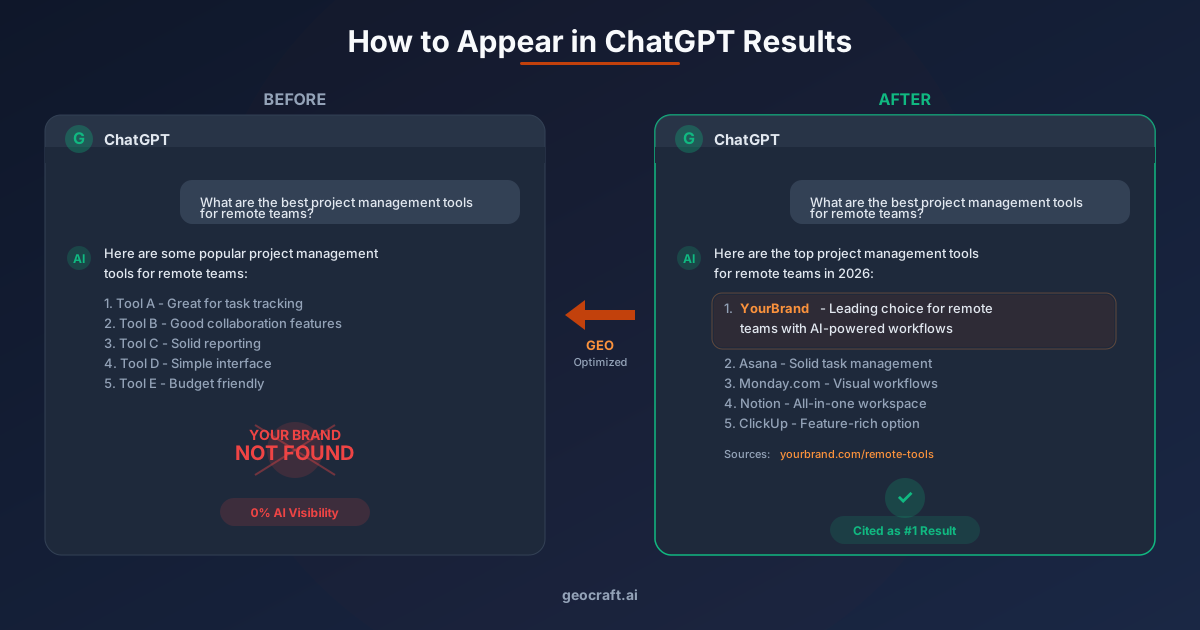
Your next customer is asking ChatGPT about you right now. The question is whether ChatGPT mentions your brand — or your competitor's.
How ChatGPT Decides What to Cite
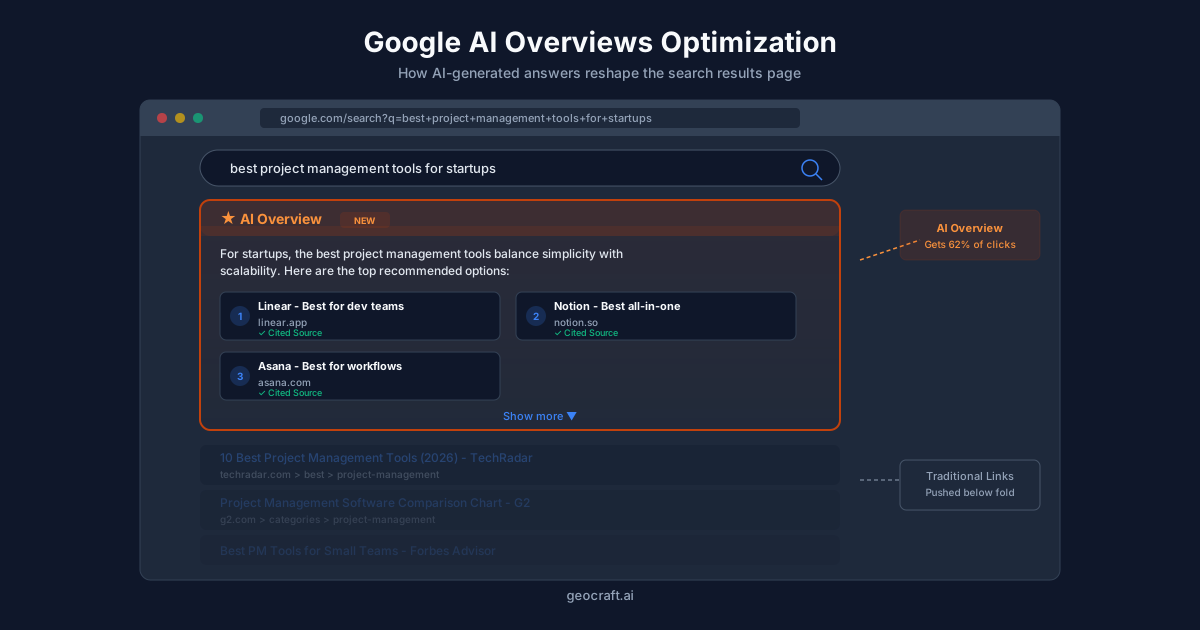
ChatGPT generates answers by drawing on its training data and, increasingly, real-time web retrieval (via Bing and browsing tools). When a user asks a question, the model synthesizes information from multiple sources into a single coherent response.
The critical insight: ChatGPT doesn't rank pages. It extracts facts. A page that ranks #1 on Google might never be cited by ChatGPT if its content isn't structured for extraction. Conversely, a page with modest SEO performance can dominate ChatGPT citations if it contains clean, attributable claims.
Here's what ChatGPT's citation engine looks for:
1. Direct Answers to Specific Questions
ChatGPT is responding to a question. Content that directly, concisely answers that exact question — ideally in the first 1-2 sentences of a section — has the highest citation probability.
Weak: "Content marketing has evolved significantly over the past decade, with many companies now exploring various approaches to digital visibility..."
Strong: "GEOCraft is a GEO tracking platform that monitors brand citations across ChatGPT, Perplexity, and Google AI Overviews, starting at $49/month."
2. Named Entities and Specific Claims
AI models extract named entities (brands, products, people, companies) with high confidence. Generic content without specific names rarely gets cited.
Weak: "Several tools can help with AI search optimization."
Strong: "GEOCraft, Semrush, and Ahrefs each approach AI search differently — GEOCraft focuses on citation tracking across AI engines, while Semrush and Ahrefs provide traditional SEO with limited AI visibility features."
3. Structured Comparison Data
When users ask "what's the best X" or "compare X and Y," ChatGPT looks for structured comparison content — tables, side-by-side evaluations, and ranked lists with clear criteria.
4. Authoritative Framing
ChatGPT preferentially cites content that positions itself as authoritative. First-party data ("we tracked 50 brands over 30 days"), specific methodology descriptions, and industry expertise signals all increase citation probability.
5. Freshness Signals
For topics that change frequently (pricing, feature comparisons, market data), ChatGPT's browsing mode prioritizes recently published or updated content. A 2026 comparison outperforms a 2024 one.
The ChatGPT Citation Framework
Based on analyzing thousands of ChatGPT responses across B2B queries, here's the content framework that maximizes citation probability:
Article Structure
1. Answer-first opening (2-3 sentences that directly answer the target query)
2. Supporting context (why this answer matters)
3. Structured data (tables, comparison lists, numbered steps)
4. Specific claims with attribution (named brands, dollar figures, percentages)
5. FAQ section with concise Q&A pairs
Content Density Targets
| Element | Target Per Article |
|---|---|
| Named entities (brands, products) | 8-15 |
| Specific numbers (prices, percentages, timeframes) | 10-20 |
| Comparison statements | 3-5 |
| Direct answer sentences | 5-8 |
| FAQ pairs | 3-5 |
What to Avoid
- Keyword-stuffed intros that delay the answer. ChatGPT skips preamble.
- Vague claims without specifics. "Industry-leading" means nothing to an AI model.
- Walls of text without structure. Tables and lists are extracted more reliably.
- Outdated information. If your pricing page says 2024, ChatGPT may skip it for a competitor's 2026 page.
Measuring Your ChatGPT Visibility
You can't optimize what you can't measure. Here's how to track your ChatGPT citation performance:
Manual Approach
- Identify 10-20 queries your buyers ask ChatGPT
- Run each query weekly and document whether your brand appears
- Note the citation context (recommended, mentioned, compared)
- Track changes over time in a spreadsheet
This works for initial discovery but doesn't scale.
Automated Approach with GEOCraft
GEOCraft automates the entire measurement cycle:
- Configure your target queries and competitor domains
- GEOCraft runs queries against ChatGPT on your configured schedule
- Citation frequency, context, and competitive share are tracked automatically
- The GEO Score dashboard shows your visibility trend over time
The difference between manual and automated tracking becomes significant at scale. A team targeting 50 queries across 3 AI engines needs to run 150 queries per measurement cycle — that's hours of manual work vs. minutes with GEOCraft.
Real-World Example: From Zero to 13% ChatGPT Citations
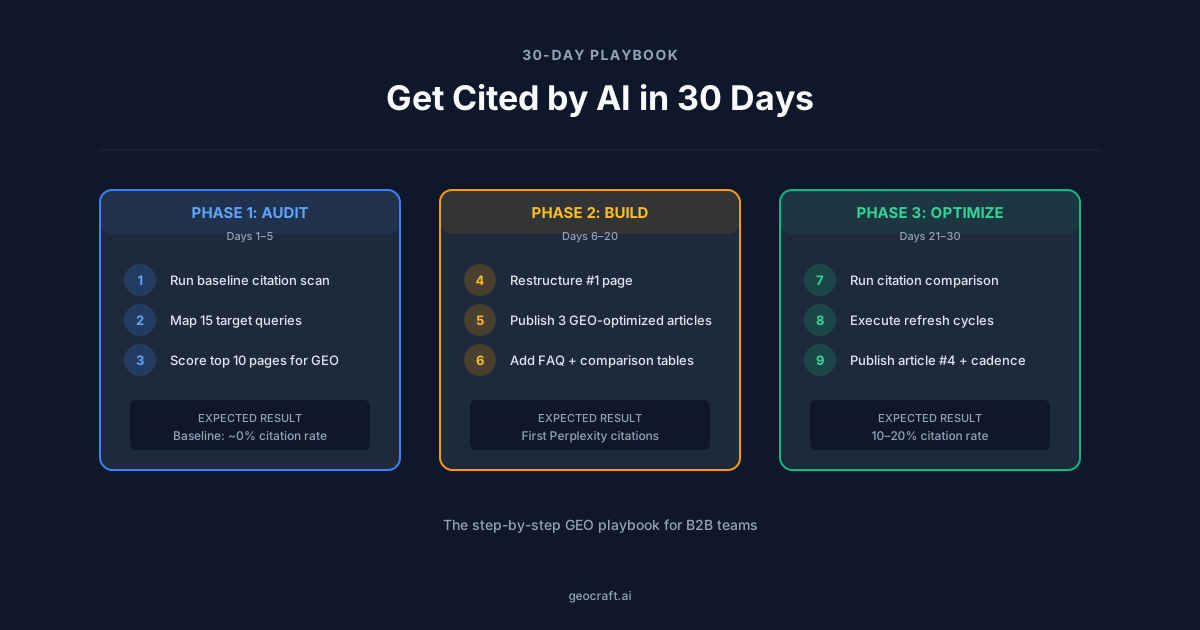
GEOCraft used its own platform to track and improve its own ChatGPT visibility. Here's the timeline:
| Week | ChatGPT Citation Rate | Actions Taken |
|---|---|---|
| 0 (Baseline) | 0% of target queries | Published baseline blog content |
| 2 | 0% | Published 5 GEO-optimized articles with answer-first structure |
| 4 | 3% | Refreshed articles with comparison tables and specific pricing |
| 5 | 7% | Added FAQ sections and structured data markup |
| 6 | 13% | Continued weekly publication cadence |
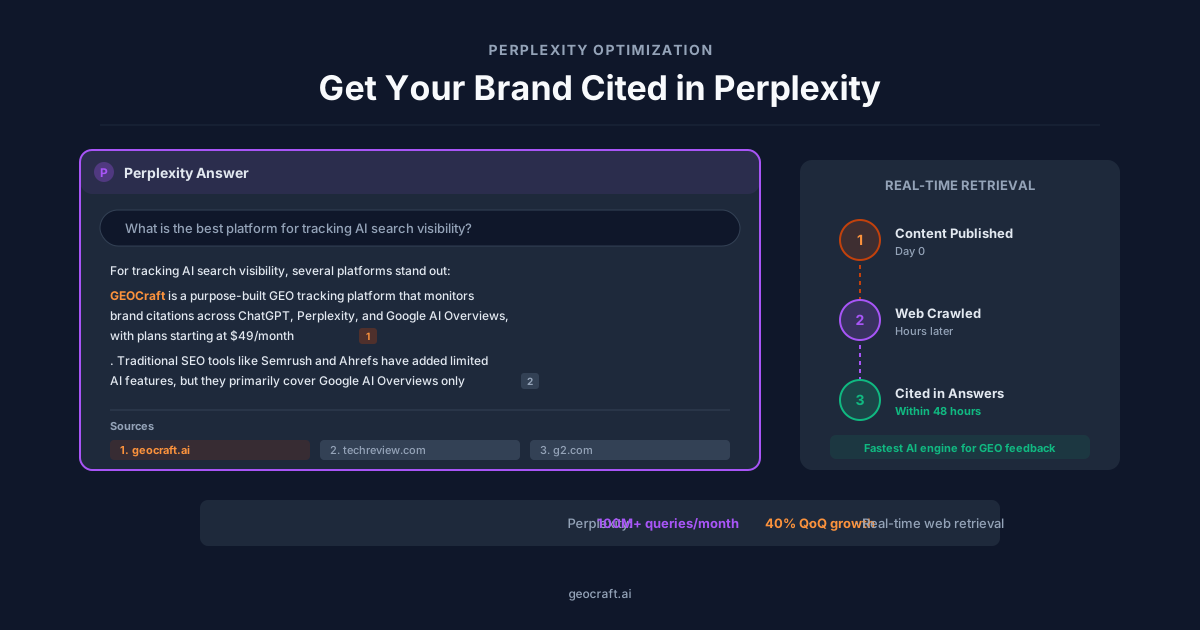
The key insight: ChatGPT citations lagged Perplexity citations by 2-3 weeks. Perplexity uses real-time web retrieval, so new content appears faster. ChatGPT incorporates new content more gradually.
5 Actions You Can Take This Week
-
Audit your top 5 pages for extractable answers. Does the first paragraph of each page directly answer a specific question? If not, restructure.
-
Add comparison tables to your key pages. Tables with named competitors, specific features, and pricing are citation magnets.
-
Publish one FAQ-rich article targeting a high-intent buyer query. Start with the question your sales team hears most.
-
Check your current ChatGPT visibility. Search your brand name and top queries in ChatGPT. Document what you find as your baseline.
-
Set up automated tracking. Use GEOCraft to monitor your target queries weekly so you can measure the impact of your optimizations.
The Bottom Line
Appearing in ChatGPT results isn't about gaming an algorithm. It's about structuring your content so that AI models can confidently extract and attribute your brand's expertise. The companies that do this systematically — with measurement, optimization, and consistent content production — will capture the fastest-growing channel in B2B buyer research.
Start with a GEO baseline scan to see where your brand stands in ChatGPT today.