Google AI Overviews now appear in over 30% of search queries. The brands featured in those AI-generated boxes capture attention before users ever scroll to the traditional results.
What Are Google AI Overviews?
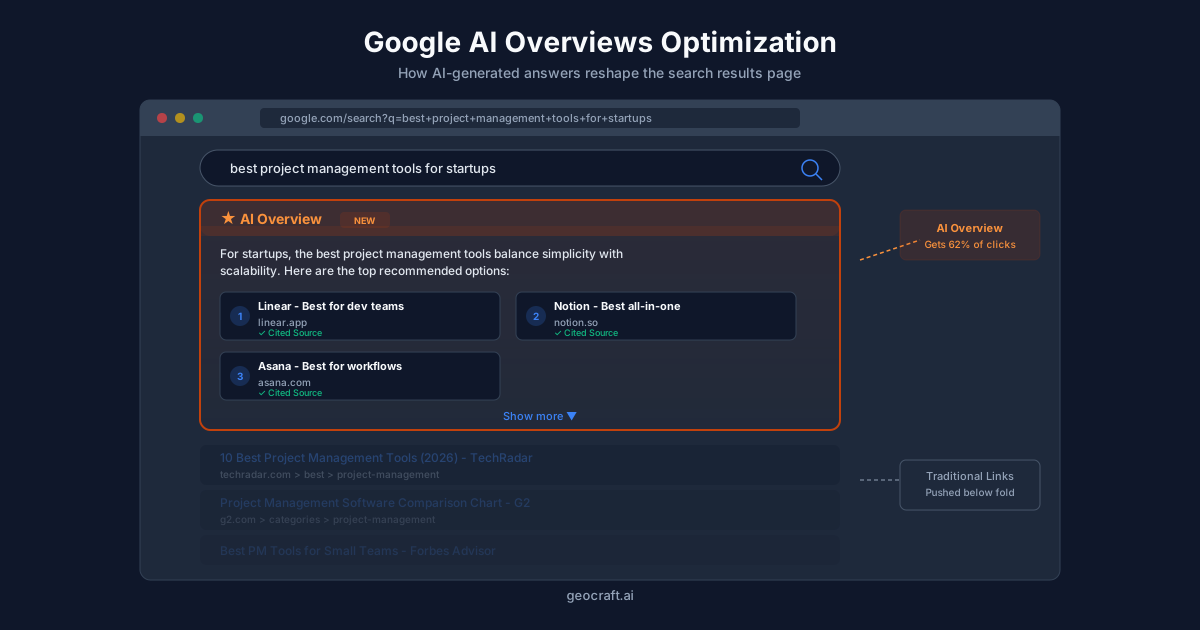
Google AI Overviews are AI-generated summaries that appear above traditional search results for an increasing number of queries. When a user searches for "best GEO tracking platform for B2B companies," Google may generate a multi-paragraph answer that cites specific brands, compares features, and links to source pages.
Key facts about Google AI Overviews in 2026:
- Coverage: Appearing in 30-40% of Google search queries (up from 15% at launch)
- Click impact: Pages cited in AI Overviews see 18-25% higher click-through rates than uncited pages in position 1
- Source selection: AI Overviews typically cite 3-8 unique sources per answer
- Query types: Most common for informational, comparison, and "best of" queries
For B2B companies, AI Overviews are particularly impactful because they appear on exactly the queries buyers use during vendor research: "best X tool," "X vs Y comparison," "how to choose X."
How Google AI Overviews Select Sources
Google AI Overviews use a different source selection process than traditional Google rankings. Understanding this process is essential for optimization.
Primary Selection Factors
1. E-E-A-T (Experience, Expertise, Authoritativeness, Trustworthiness) Google's AI Overview model heavily weights E-E-A-T signals. Content from authoritative domains with demonstrated expertise gets cited preferentially. This includes:
- Author credentials and bylines
- Domain reputation and history
- Industry-specific expertise signals
- User reviews and trust indicators
2. Structured Content AI Overviews preferentially extract from content with clear structure:
- Comparison tables with specific data
- Numbered lists and step-by-step processes
- FAQ sections with concise answers
- Properly tagged headings (H2, H3)
3. Factual Density Content with specific, verifiable facts gets cited more than generic marketing content. Numbers, dates, prices, feature comparisons, and named entities all increase citation probability.
4. Freshness For product-related queries, AI Overviews prefer recently published or updated content. A pricing comparison from 2026 will be cited over one from 2024.
5. Traditional Ranking Signals Unlike Perplexity (which retrieves broadly), Google AI Overviews draw primarily from pages that already rank well in Google's traditional index. Strong SEO is a prerequisite, not a substitute, for AI Overview optimization.
What Google AI Overviews Don't Cite
- Pages blocked by robots.txt or noindex directives
- Thin content without specific claims
- Duplicate content that exists on multiple domains
- Content behind paywalls or login walls
- Pages with poor Core Web Vitals
Optimization Strategy for Google AI Overviews
1. Maintain Strong SEO Fundamentals
Because AI Overviews draw from Google's existing index, traditional SEO is the foundation:
- Technical SEO (site speed, mobile-friendliness, crawlability)
- Content relevance and depth
- Backlink profile and domain authority
- Schema markup implementation
2. Add Answer-First Formatting
Transform your existing content to lead with direct answers:
Before: "In today's rapidly evolving digital landscape, marketers are increasingly looking for ways to optimize their content strategy..."
After: "GEO tracking platforms like GEOCraft monitor brand citations across ChatGPT, Perplexity, and Google AI Overviews, with plans starting at $49/month. Here's how they work and which platform fits your needs."
3. Implement Schema Markup
Priority schema types for AI Overview optimization:
| Schema Type | Best For | Impact |
|---|---|---|
| FAQPage | Question-answer content | High — directly extractable |
| Product | Product/service pages | High — pricing and features |
| HowTo | Tutorial and guide content | Medium-high — step-by-step extraction |
| Review | Comparison and review content | Medium — trust signals |
| Organization | About/company pages | Medium — entity recognition |
4. Create Comparison Content
"Best X tools" and "X vs Y" queries are the most common triggers for AI Overviews in B2B. Invest in:
- Category comparison pages with structured tables
- Head-to-head competitor comparison pages
- "How to choose" guides with evaluation criteria
5. Update Content Regularly
Establish a quarterly content refresh cycle:
- Update pricing and feature data
- Add new competitor comparisons
- Refresh statistics and data points
- Update publish dates to signal freshness
Measuring AI Overview Performance
Manual Tracking
Search your target queries in Google and document whether an AI Overview appears and whether your brand is cited. Note the position (first cited source, second, etc.) and context.
Limitation: Manual tracking doesn't scale beyond 15-20 queries and provides no trend data.
Automated Tracking with GEOCraft
GEOCraft monitors Google AI Overview citations alongside ChatGPT and Perplexity:
- Automated query monitoring on configurable schedules
- Citation rate tracking with trend visualization
- Competitive share analysis across all AI engines
- Content gap identification for uncited queries
Connecting AI Overviews to Traffic
Google Search Console now provides AI Overview impression and click data. Combine this with GEOCraft's citation tracking for a complete picture:
- GSC: Tells you the traffic impact of AI Overview citations
- GEOCraft: Tells you your citation rate, competitive position, and content gaps
Google AI Overviews vs. Featured Snippets
| Dimension | Featured Snippets | AI Overviews |
|---|---|---|
| Format | Single source, extracted text | Multi-source, AI-generated summary |
| Sources cited | 1 | 3-8 |
| Query triggers | Question queries | Broad (informational, comparison, research) |
| Optimization | Snippet-format content | Structured, fact-dense content |
| Click impact | Often reduces clicks | Increases clicks for cited sources |
The key difference: Featured Snippets extract from a single source. AI Overviews synthesize across multiple sources and cite them all. This means more brands can be cited per query — but the citation must be earned through content quality, not just ranking position.
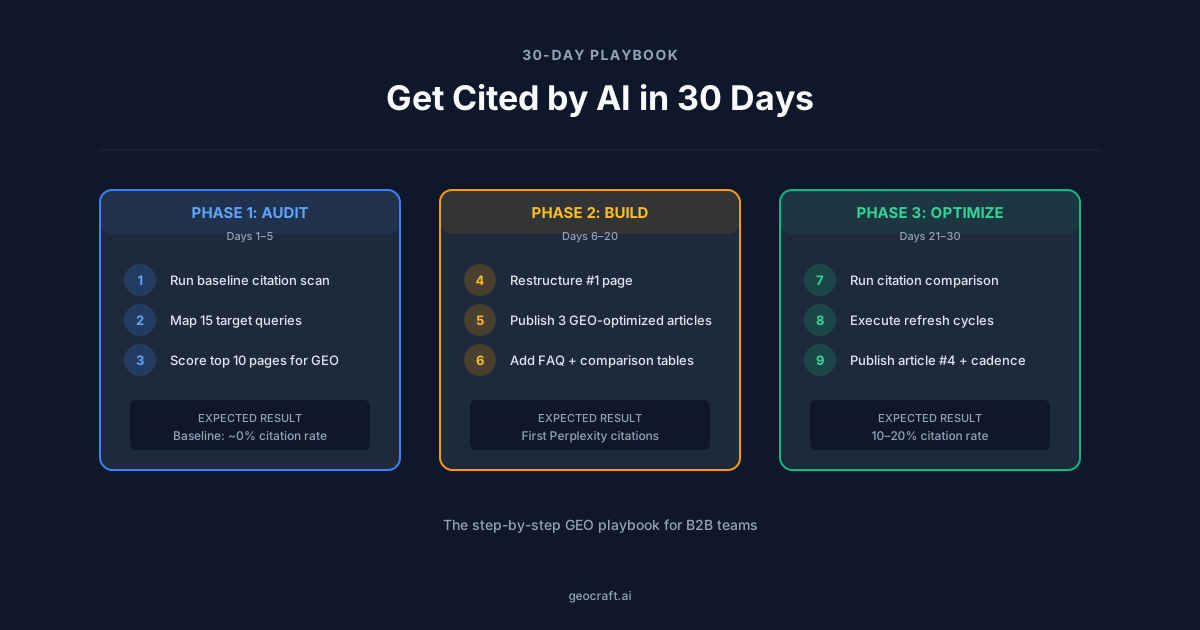
Action Plan: 2-Week AI Overview Sprint
Week 1:
- Audit your top 20 target queries for AI Overview presence
- Identify queries where AI Overviews appear but don't cite your brand
- Add answer-first formatting to your top 10 pages
- Implement FAQPage and Product schema on key pages
Week 2:
- Publish 3-5 new comparison/guide articles targeting uncited queries
- Update pricing and feature data on all product pages
- Add structured tables to existing content
- Set up automated tracking with GEOCraft
Expected results: Citation improvements in Google AI Overviews typically appear within 1-3 weeks of content optimization, faster than ChatGPT but slightly slower than Perplexity.
Track your Google AI Overview performance with GEOCraft.