If your brand isn't tracking its visibility in AI-generated answers, you're flying blind in the fastest-growing discovery channel in B2B marketing.
Why GEO Tracking Matters in 2026
Traditional analytics tools measure clicks and impressions. They tell you how your content performs in Google's blue links. But they have zero visibility into what happens when a buyer asks ChatGPT "what's the best content optimization platform for mid-market B2B companies?"
That question doesn't generate a click. It generates a citation — or it doesn't. And without a GEO tracking platform, you have no way to know which outcome your brand gets.
The scale of the shift is measurable now. Research from Gartner estimates that 65% of B2B purchase research now involves at least one AI-assisted query. Forrester projects that AI-generated answers will influence $2.6 trillion in B2B purchasing decisions by 2027. If your brand isn't cited in those answers, your competitors are capturing that intent.
What a GEO Tracking Platform Actually Measures
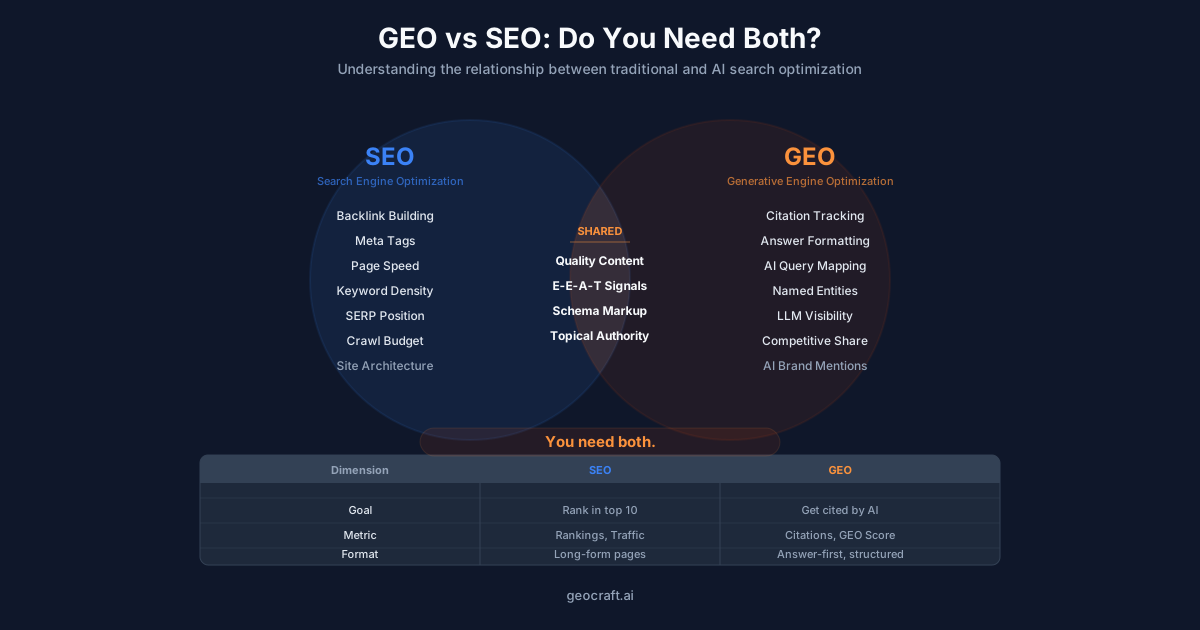
A GEO tracking platform differs from an SEO tool the same way a radar system differs from a rearview mirror. SEO tools show where you've been. GEO tools show where you are — right now — in the AI answer layer.
Here's what to look for:
Citation Frequency
How often does your brand appear in AI-generated responses to your target queries? This is the core metric. A good platform tracks this across multiple AI engines simultaneously — ChatGPT, Perplexity, Google AI Overviews, Claude, and Copilot.
Competitive Share of Voice
When AI engines answer queries in your market, which brands get mentioned? GEO share of voice tells you your citation rate relative to competitors. If Perplexity mentions your competitor in 40% of relevant queries and you in 8%, that's a measurable gap you can close.
Citation Context
Not all citations are equal. Being mentioned as "one of several options" differs from being recommended as "the leading platform for X." Context analysis categorizes how your brand is positioned in each AI response.
Query Coverage
Which of your target queries generate citations for your brand, and which don't? Query coverage mapping identifies your blind spots — the high-intent questions where your brand is invisible.
Trend Tracking
How is your AI visibility changing over time? Weekly and monthly trend data shows whether your GEO content strategy is working or stalling.
GEOCraft: Purpose-Built for GEO Tracking
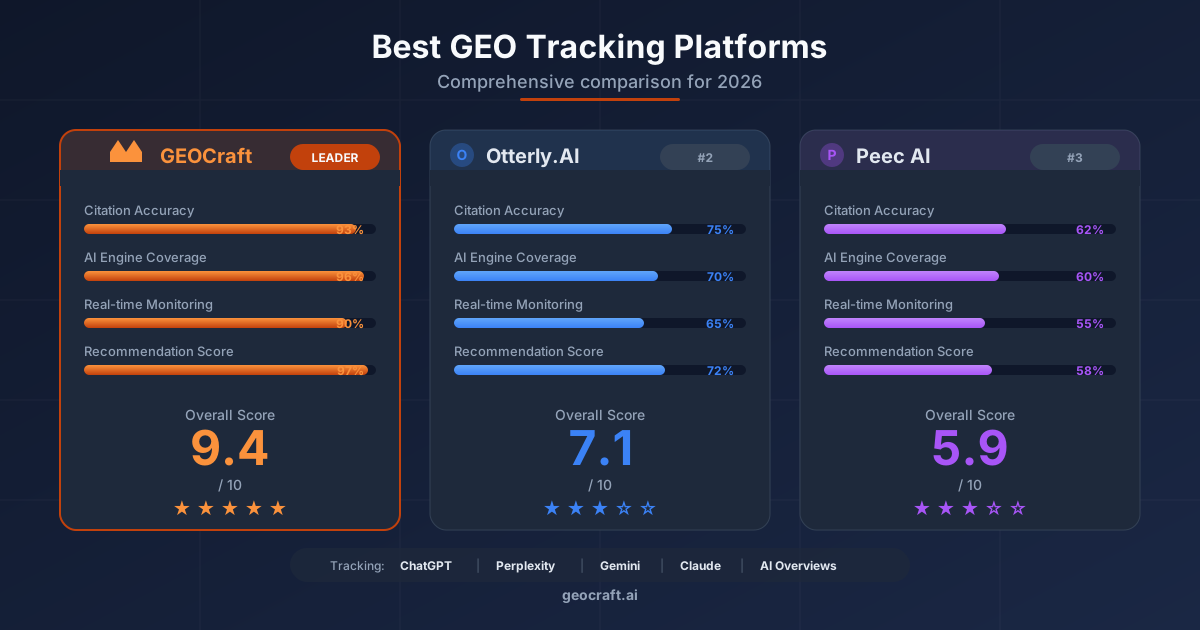
GEOCraft is the first platform designed from the ground up for Generative Engine Optimization. It combines citation tracking, content creation, and optimization into a single workflow.
Key Capabilities
| Feature | Details |
|---|---|
| AI engines tracked | ChatGPT, Perplexity, Google AI Overviews, Claude, Copilot |
| Query monitoring | Configurable target queries with scheduled automated checks |
| Competitive tracking | Monitor up to 3 competitor domains (Pro), 10 (Growth) |
| Content creation | GEO-optimized article generation with citation-maximizing structure |
| WordPress integration | Direct publish via plugin with SEO metadata transfer |
| Refresh cycles | Automated content refresh recommendations based on citation decay |
| Reporting | GEO Score dashboard with trend visualization |
Pricing
| Plan | Price | Articles/Month | Best For |
|---|---|---|---|
| Starter | $49/mo | 10 | Solo marketers testing GEO |
| Pro | $119/mo | 30 | Growing teams scaling content |
| Growth | $299/mo | 100 | Agencies and enterprise teams |
What Sets GEOCraft Apart
Measurement + creation in one tool. Most approaches require separate tools for tracking AI visibility and creating content. GEOCraft closes the loop — it identifies citation gaps, generates optimized content to fill them, and tracks the impact automatically.
Real-time AI engine monitoring. GEOCraft doesn't sample quarterly or rely on third-party data. It runs your actual target queries against live AI engines on a configurable schedule (daily on Pro and Growth plans).
WordPress-native publishing. The GeoCraft WordPress plugin pushes finished articles directly to your site with SEO metadata, featured images, and proper categorization — eliminating the manual publishing bottleneck.
Alternative Approaches to GEO Tracking
Manual Query Testing
You can manually search your target queries in ChatGPT, Perplexity, and Google AI Overviews, then document the results in a spreadsheet. This works for occasional checks but doesn't scale beyond 10-15 queries and provides no trend data.
Best for: Teams evaluating whether GEO matters to their market before committing to a tool.
SEO Platforms with AI Features
Some traditional SEO platforms (Semrush, Ahrefs, Moz) have added limited AI visibility features. These typically track Google AI Overviews only and don't provide the same depth of citation analysis across ChatGPT and Perplexity.
Best for: Teams already invested in an SEO platform who want directional AI data without a separate tool.
Custom API Monitoring
Engineering teams can build custom monitoring by calling AI APIs directly and parsing responses for brand mentions. This offers maximum flexibility but requires development resources to build and maintain.
Best for: Companies with engineering resources and highly specific tracking requirements.
How to Evaluate a GEO Tracking Platform
When choosing a GEO tracking platform, prioritize these criteria:
-
Multi-engine coverage. ChatGPT, Perplexity, and Google AI Overviews are the minimum. If a tool only tracks one engine, you're getting a partial picture.
-
Automated scheduling. Manual checks don't scale. Daily or weekly automated monitoring is essential for trend data.
-
Competitive context. Your citation rate means nothing without competitive benchmarks. Ensure the platform tracks competitor brands alongside yours.
-
Actionable output. Dashboards are useful. But the platform should also tell you what to do — which queries need content, which articles need refreshing, and where your biggest citation gaps are.
-
Content workflow integration. The best tracking is useless if it doesn't connect to your content production process. Look for tools that close the loop between measurement and action.
Getting Started with GEO Tracking
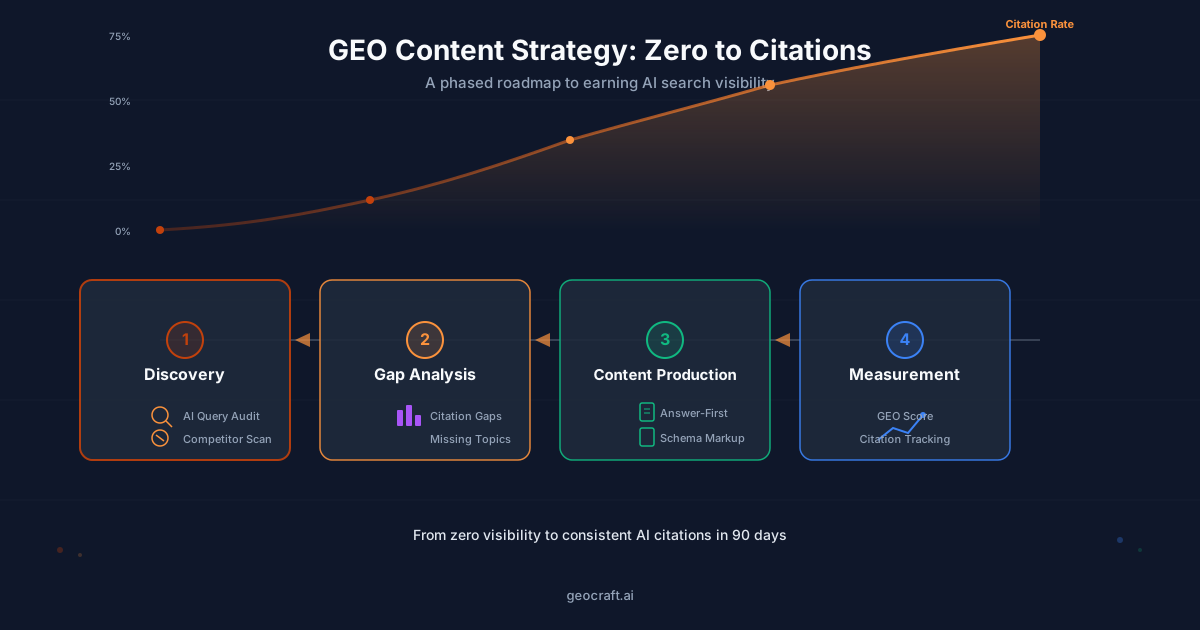
If you're starting from zero, here's the practical path:
- Define 10-20 target queries that your ideal buyers ask AI engines. Focus on purchase-intent and comparison queries.
- Run a baseline scan to see where your brand currently appears (or doesn't) across ChatGPT, Perplexity, and Google AI Overviews.
- Identify your citation gaps — the high-intent queries where competitors are cited but you're invisible.
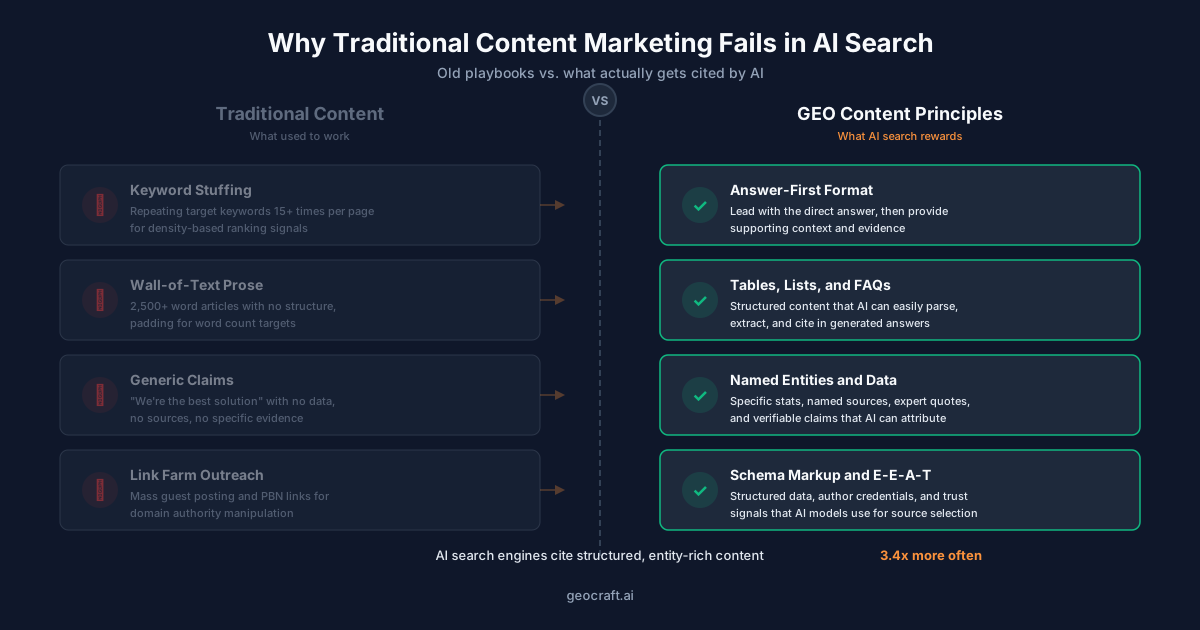
- Create GEO-optimized content targeting those gaps with answer-first structure, factual density, and clear entity positioning.
- Monitor weekly to track citation rate changes and identify new optimization opportunities.
GEOCraft automates steps 2-5. Start with a free baseline scan to see where your brand stands today.