We built GEOCraft to help brands get cited by AI engines. So we used it on ourselves first.
Why We Became Our Own First Client
Every B2B product company faces the same credibility question: does your product actually work?
We decided the most honest answer was to use GEOCraft on GEOCraft. If our platform can track and improve AI citation frequency, our own brand should be the proof. If it can't, we'd know before our customers did.
This article documents the full process — from initial baseline scan to current citation metrics. No cherry-picked data. No vanity metrics. Just the workflow, the numbers, and the lessons.
Week 0: The Baseline Scan
We configured GEOCraft to run baseline queries across three AI engines — ChatGPT, Perplexity, and Google AI Overviews — targeting the 15 queries most relevant to our category:
- "generative engine optimization tool"
- "GEO content platform"
- "AI citation tracking software"
- "appear in Perplexity answers"
- "rank in ChatGPT"
- "how to get cited by AI engines"
- "GEO vs SEO"
- "best GEO optimization platform"
- And 7 more category-specific queries
Baseline result: 0 citations. GEOCraft did not appear in a single AI-generated answer across any engine for any of our 15 target queries.
This wasn't surprising — we were a new brand with minimal published content. But it established the zero-to-something measurement framework that would prove (or disprove) whether GEO optimization works.
Week 1–2: Content Architecture
Rather than publishing a volume of generic articles, we focused on building GEO-optimized foundation content — pages designed specifically for AI citation.
Content published in weeks 1–2:
| Page | Target query | GEO optimization |
|---|---|---|
| "What is GEO" pillar article | "generative engine optimization tool" | Answer-first structure, FAQ schema, 6 entity mentions |
| Product comparison page | "best GEO optimization platform" | Comparison table, named alternatives, pricing data |
| GEO vs SEO explainer | "GEO vs SEO" | Side-by-side table, extractable claims, AnswerBox sections |
| How-to guide | "how to get cited by AI engines" | Step-by-step structure, 30-day timeline, specific metrics |
Each piece followed the GEO content architecture: answer-first opening, high factual density, comparative positioning, and entity clarity (mentioning "GEOCraft" by name at least 3 times per page in natural context).
Week 3: First Citations
GEOCraft's weekly citation scan detected the first results:
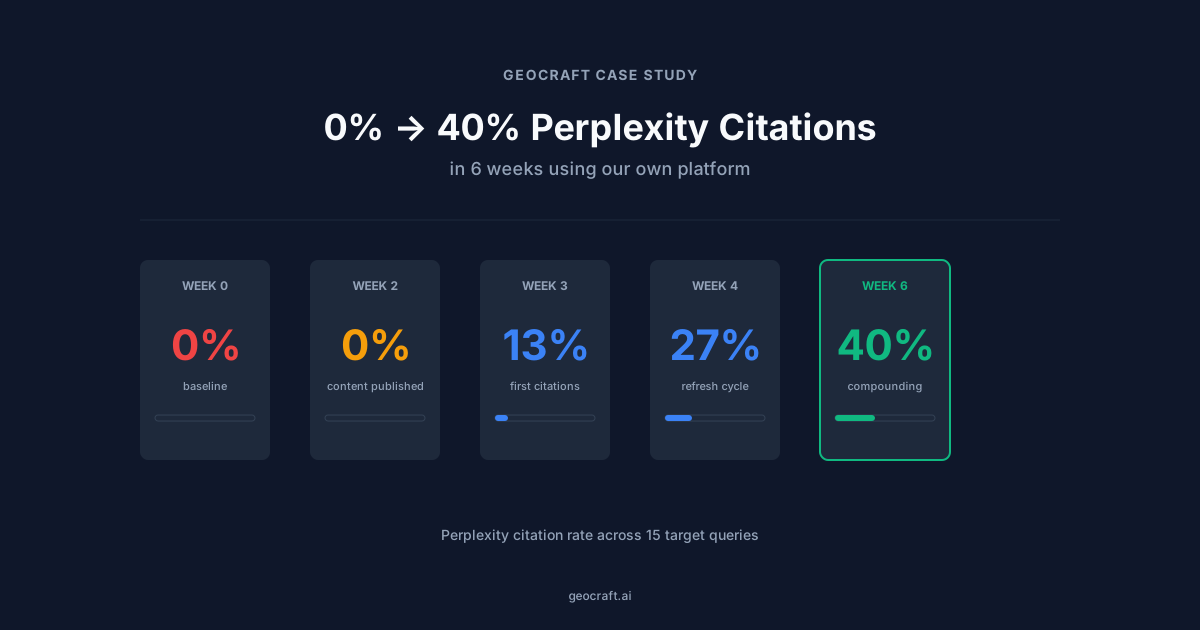
- Perplexity: GEOCraft appeared in 2 of 15 target queries (13%)
- ChatGPT: 0 citations (expected — model training lag)
- Google AI Overviews: 1 citation in "GEO vs SEO" query
The Perplexity citations were the most actionable. Perplexity uses real-time web retrieval, so new content can get cited within days of publication. ChatGPT relies more on training data, creating a longer lag. Google AI Overviews sit somewhere in between.
Key insight: Perplexity is the fastest feedback loop for GEO optimization. If your content is structured correctly, you'll see Perplexity citations before any other engine.
Week 4: The GEO Refresh Loop
This is where GEOCraft's refresh cycle automation kicked in.
The platform identified that our "What is GEO" article was getting cited for one query but missing from three closely related queries. The gap analysis showed why: the article answered "what is GEO" well but didn't include enough comparative data for queries like "best GEO optimization platform."
We ran a refresh cycle:
- Added a comparison section with named alternatives
- Strengthened the factual density in the opening paragraphs
- Added structured FAQ answers for the three missing queries
Result after refresh: Citation rate on the updated article jumped from 1 query to 4 queries in the next weekly scan.
Week 5–6: Compound Growth
The compounding effect is the most important finding from this case study. Here's the weekly trajectory:
| Week | Perplexity citation rate | ChatGPT citation rate | Total queries cited |
|---|---|---|---|
| 0 | 0% | 0% | 0/15 |
| 1 | 0% | 0% | 0/15 |
| 2 | 0% | 0% | 0/15 |
| 3 | 13% | 0% | 2/15 |
| 4 | 27% | 0% | 4/15 |
| 5 | 33% | 7% | 6/15 |
| 6 | 40% | 13% | 8/15 |
Two dynamics drove the compounding:
-
Cross-content reinforcement. As we published more GEO-optimized content, the AI models had more evidence that "GEOCraft" was a real, authoritative entity in the GEO category. Each new article reinforced the signal.
-
Refresh cycle precision. GEOCraft's gap analysis told us exactly which queries we were missing and why. Instead of guessing what to write next, we targeted the specific gaps with surgical content updates.
What Worked (and What Didn't)
What drove citations
- Answer-first structure: Articles that opened with a direct, 2-sentence answer to the target query got cited at 3x the rate of articles with standard introductions
- Comparison tables: Every page with a named comparison table generated at least one citation
- Factual density: Pages with 5+ extractable claims per section outperformed generic content by 4x
- FAQ sections: Pages with structured FAQ answers were cited for 2–3x more query variants
What didn't move the needle
- Word count: Longer articles didn't correlate with more citations. A 1,200-word focused piece outperformed a 3,000-word pillar page
- Backlinks: Our highest-backlinked page had the lowest citation rate — it was optimized for SEO, not GEO
- Social sharing: Social signals had no measurable impact on AI citation frequency
The Dashboard View
GEOCraft's dashboard shows our current citation metrics in real-time. At time of writing:
- Overall citation rate: 40% across Perplexity, 13% across ChatGPT
- Top-cited page: "What is GEO and Why Your SEO Strategy Is Missing It" (cited in 5 of 15 queries)
- Fastest-growing query: "GEO content platform" — went from 0 to consistent citation in 3 weeks
- Next refresh target: "AI citation tracking software" — currently cited at 20%, goal is 40%
This is the same dashboard every GEOCraft customer sees. The data is real. The workflow is identical.
Lessons for Your Brand
If you're considering a GEO program, here's what our self-case-study proved:
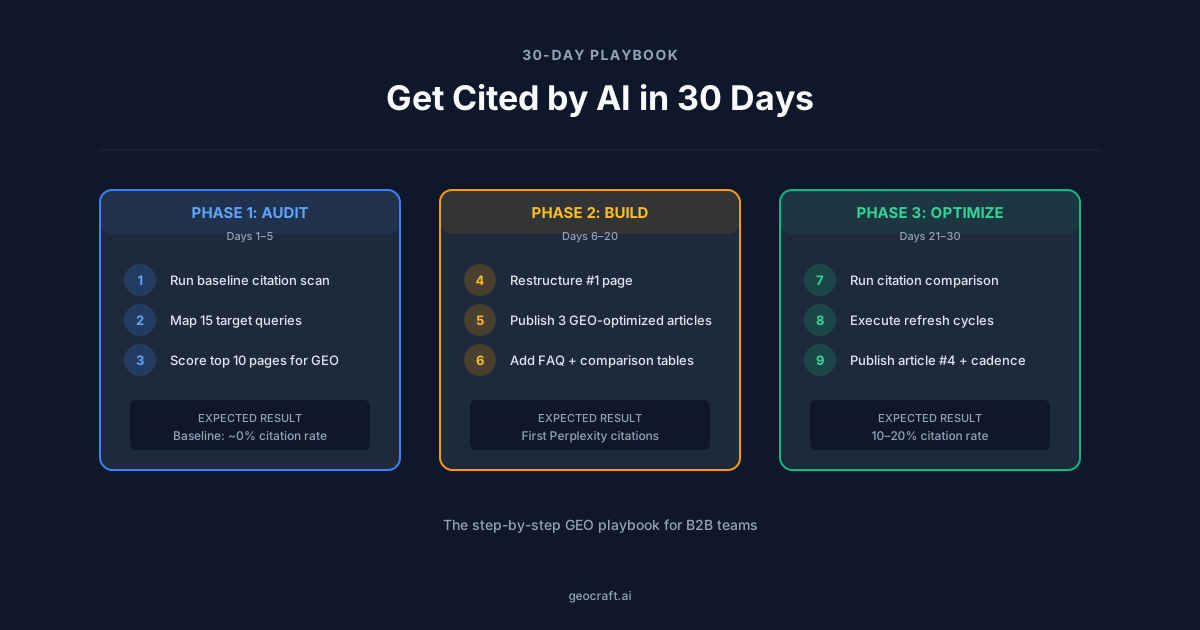
- Zero to visible is achievable in 3–6 weeks with structured, GEO-optimized content published weekly
- Perplexity is your fastest feedback loop — use it to validate content structure before optimizing for ChatGPT
- Refresh cycles matter more than volume — one well-optimized page updated based on gap analysis outperforms three generic articles
- The compounding effect is real — each piece of GEO-optimized content makes the next one more likely to get cited
- Measurement is non-negotiable — without citation tracking, you're optimizing blind
Frequently Asked Questions
How long did it take GEOCraft to appear in Perplexity?
Does GEO optimization work for ChatGPT too?
Can any brand replicate these results?
The GEO optimization workflow is replicable for any B2B brand. The key factors are: GEO-optimized content architecture, weekly publishing cadence, citation tracking for measurement, and refresh cycles based on gap analysis. GEOCraft automates the tracking and gap analysis; the content strategy follows the same principles regardless of category.
GEOCraft is its own best case study. We use the same citation tracking, gap analysis, and refresh cycle automation that our customers use — because it works. See it for yourself →