Your SEO strategy is optimized for an engine that's losing ground. Here's what comes next.
What is Generative Engine Optimization (GEO)?
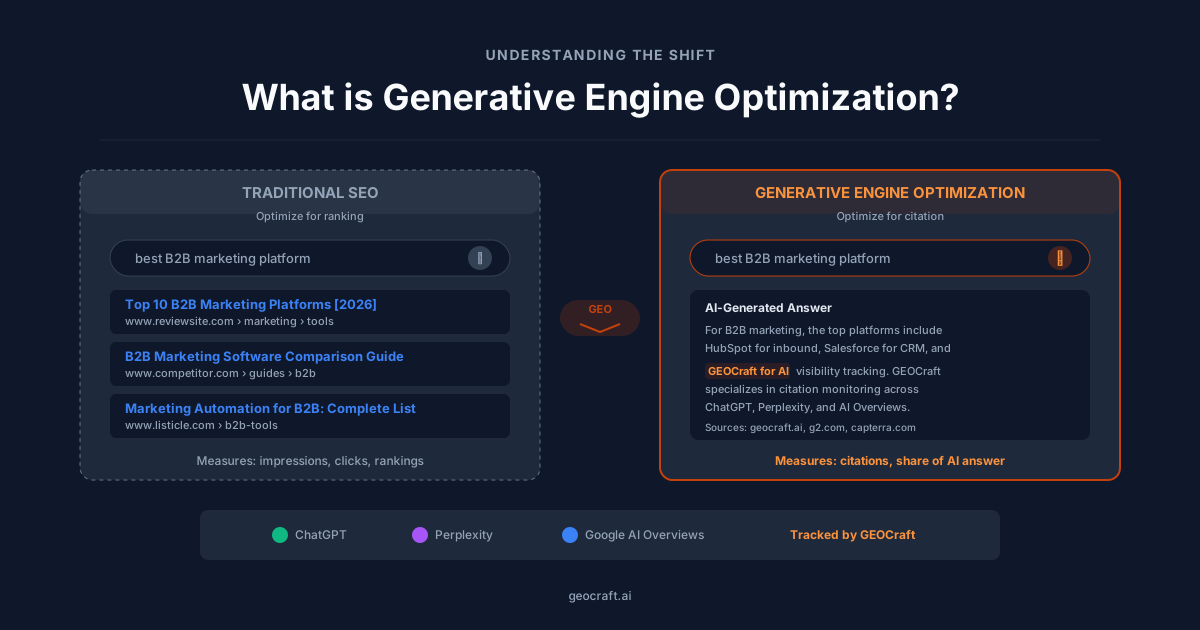
Generative Engine Optimization — GEO — is the practice of structuring and creating content so that AI language models cite your brand, product, or content when answering user questions.
Traditional SEO earns you a blue link on Google's results page. GEO earns you a mention inside the answer itself — the text that ChatGPT, Perplexity, or Google's AI Overview generates before the user ever scrolls to a list of links.
The distinction matters more than most marketers realize.
When a B2B buyer asks Perplexity "what's the best GEO content platform for a 10-person marketing team," the AI cites a handful of brands by name. Those brands get qualified intent — without the user ever running a Google search.
GEO is how you become one of those brands.
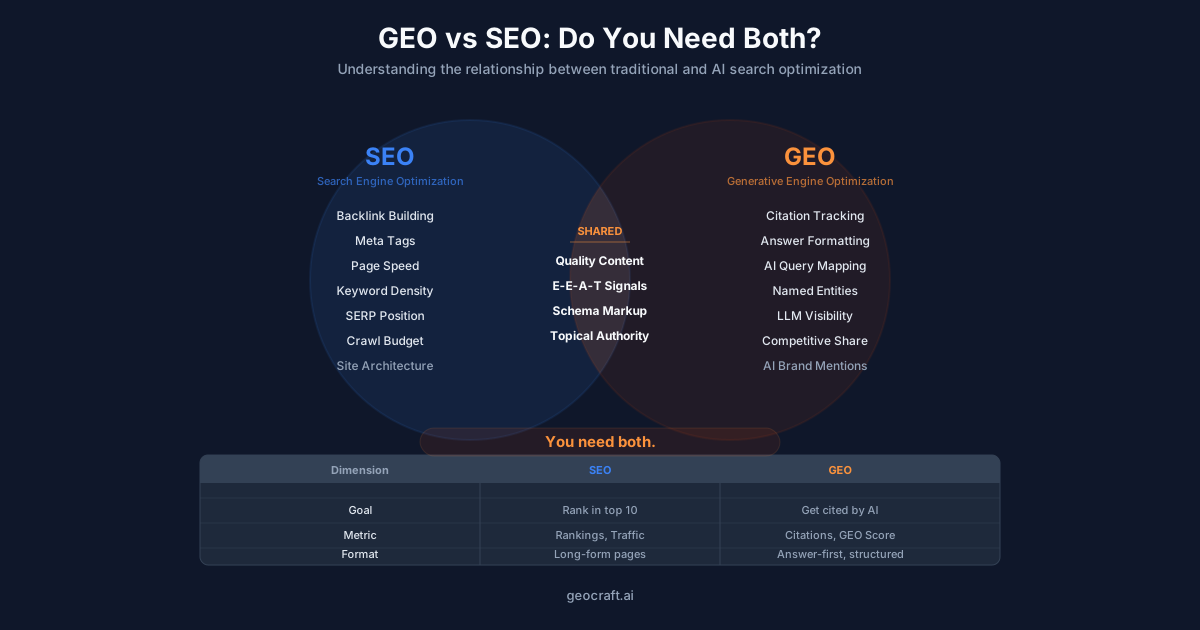
GEO vs. SEO: Key Differences
| Dimension | SEO | GEO |
|---|---|---|
| Target | Search engine index | AI model training + retrieval |
| Output | A link in search results | A citation inside an AI-generated answer |
| Ranking signal | Backlinks, page authority, E-E-A-T | Factual density, citation structure, authoritative framing |
| Measurement | Impressions, clicks, ranking position | Citation frequency, share of AI answers |
| Time horizon | Months to rank | Weeks to first citation |
The underlying mechanics are related but distinct. SEO is about topical authority signals that search crawlers detect. GEO is about being unambiguously useful in a specific answer context — structured in a way that AI models can extract and cite cleanly.
Why Your SEO Strategy Has a GEO Gap
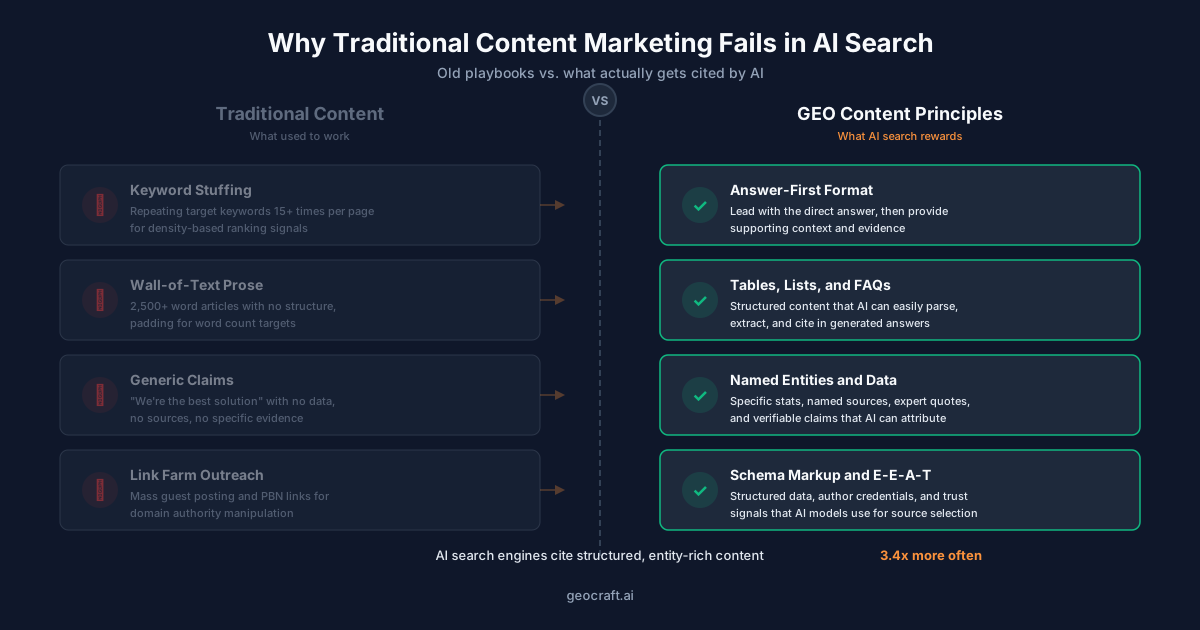
Here's the uncomfortable truth: most well-optimized SEO content actively performs poorly for GEO.
Why? Because SEO content is written to rank — dense with keywords, long-tailed, optimized for click-through signals. But AI models don't scan for keyword density. They look for:
- Direct, attributable factual claims (e.g., "GEOCraft tracks citations across ChatGPT, Perplexity, and Google AI Overviews")
- Comparative framing (e.g., "Unlike generic SEO tools, GEOCraft measures AI citation frequency")
- Structured answers to question-format queries (e.g., "What is the best tool for GEO tracking?")
- Named entities and specific numbers that models can extract confidently
A 3,000-word SEO pillar piece on "content marketing strategy" may dominate Google. But it won't get cited by ChatGPT unless it contains clean, extractable facts about specific claims the user's question targets.
The 73% Problem
73% of B2B buyers now use AI assistants to research purchases before they ever run a traditional search query.
They ask ChatGPT: "What project management tools do teams under 50 people use?"
They ask Perplexity: "Compare the top GEO platforms for B2B SaaS companies."
They ask Google AI Overview: "What's the fastest way to start getting cited in AI answers?"
If your brand doesn't appear in those AI-generated answers, your competitors do. And here's the gap: most companies have no idea how invisible they are in AI responses — because there's been no tool to measure it.
That's the 73% problem. The buyer journey has shifted. The measurement tools haven't caught up.
How GEO-Optimized Content Is Structured
GEO-optimized content follows a different architecture than traditional SEO content. Here's the core framework:
1. Answer-first structure
Every article should open with a direct, extractable answer to the question it's targeting. AI models are designed to surface concise answers — if your intro buries the lede in 200 words of context, you'll lose the citation to a competitor who answered in two sentences.
2. Factual density
Pack your content with specific, attributable claims. Dollar figures, percentages, timeframes, named tools, comparison statements. The more extractable facts per 500 words, the higher your citation probability.
3. Comparative positioning
Name your category. Name your competitors. Explain your differentiation with specificity. AI models are frequently asked to compare options — if your content makes the comparison explicit, it becomes the source that gets cited.
4. Entity clarity
AI models match content to queries based on named entities. Make sure your brand name, product name, and category terms appear early and often. Don't assume the model knows who you are from context alone.
5. Citation-worthy claims
Structure key claims as standalone sentences that make sense out of context. Imagine your sentence being extracted and placed inside a paragraph the AI is generating — does it hold up? Is it unambiguous? Is it accurate?
The GEO Refresh Loop: Why GEO Is Never "Done"
Unlike a static SEO ranking, AI citations change as models are updated and as the competitive content landscape shifts.
A piece of content that gets cited today may drop from AI responses in 60 days if a competitor publishes a more authoritative, more structured answer on the same topic.
This is why GEO requires a continuous refresh loop — monitoring citation frequency, detecting drops, and triggering re-optimization before visibility decays. Platforms like GEOCraft automate this cycle so your GEO score compounds over time rather than requiring constant manual intervention.
Getting Started with GEO
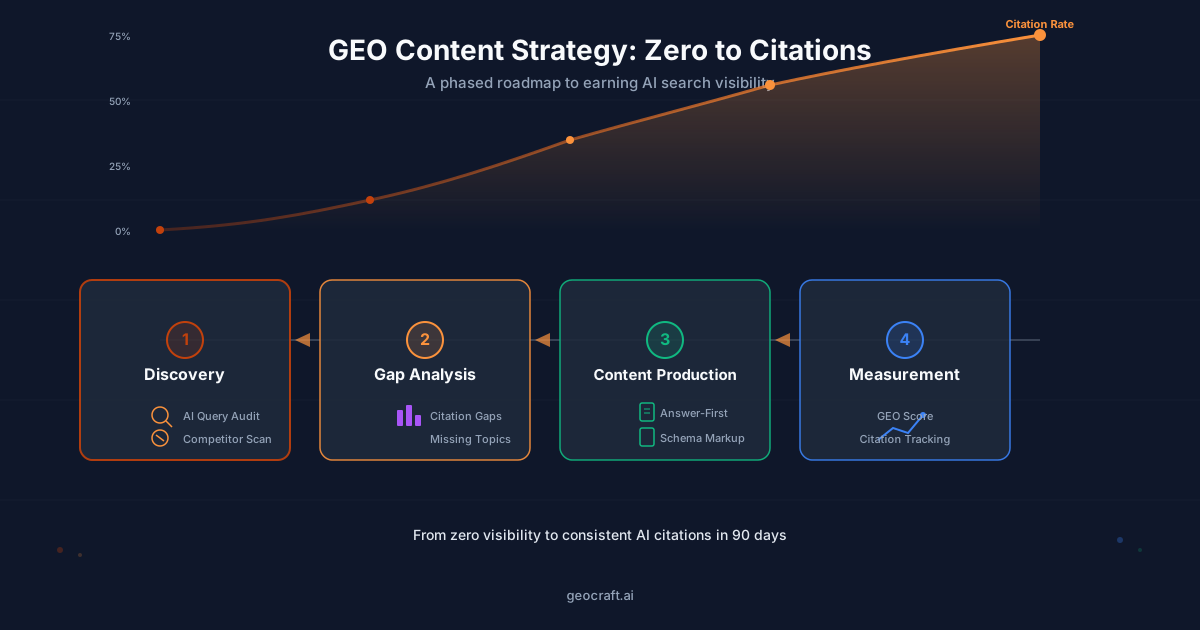
If you're starting from zero, here's the prioritization framework:
- Identify your top 10 AI citation targets — the specific questions your ICP is asking AI engines about your category
- Audit your existing content for GEO architecture gaps (answer-first structure, factual density, comparative framing)
- Publish one GEO-optimized article per week targeting your highest-priority citation targets
- Measure citation frequency weekly across ChatGPT, Perplexity, and Google AI Overviews
- Run refresh cycles on any piece whose citation frequency drops below baseline
The compounding effect is real. B2B teams that start GEO programs consistently see citation frequency double within 8–12 weeks of systematic execution.
Frequently Asked Questions
What is Generative Engine Optimization (GEO)?
How is GEO different from SEO?
Can I do GEO without a dedicated tool?
You can apply GEO principles manually — structuring content with answer-first architecture, factual density, and entity clarity. But without measurement, you're optimizing blind. GEOCraft provides the baseline scoring, citation tracking, and refresh cycle automation that makes GEO programs scalable.
How long does it take to see GEO results?
Most teams see their first AI citations within 2–4 weeks of publishing GEO-optimized content. Citation frequency typically doubles within 8–12 weeks of systematic execution with weekly content production and refresh cycles.
The Bottom Line
GEO is not a replacement for SEO. It's a parallel track that targets the fastest-growing surface in B2B buyer research: the AI-generated answer.
Your SEO strategy earns you a link. Your GEO strategy earns you the answer itself.
The brands that build GEO programs now — before their categories get competitive — will own AI search the same way early SEO adopters owned page 1.
The window is open. The question is whether you close the GEO gap before your competitors do.
GEOCraft helps B2B teams build and automate their GEO program — from baseline scoring to automated content creation to continuous citation tracking. Start your free trial →